
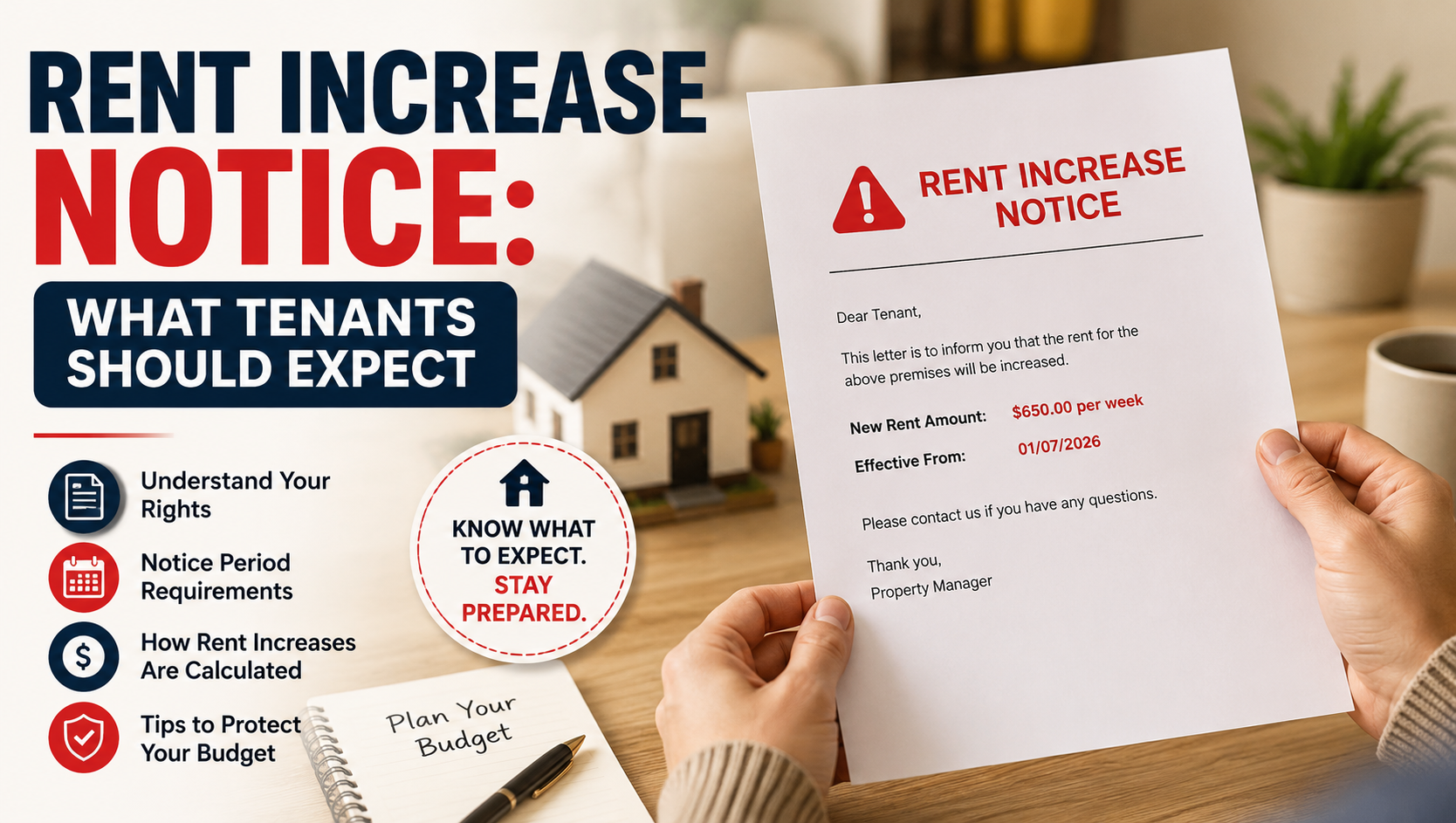
You open the mailbox, see an envelope with your landlord’s name on it, and your stomach drops a little before you’ve even opened it. You just know. A rent increase notice has this way of ruining an otherwise normal afternoon. And if it’s your first time getting one, it can honestly feel kind of scary. Is this even legal? Do I have to pay it right away? Can I push back? Did I miss some deadline I didn’t know existed?
Here’s the reassuring part: rent increases usually follow a pretty set pattern once you know what to look for. Your landlord can’t just pick a number out of thin air and demand it starting tomorrow. There are rules involved , some from state law, some from city ordinances, some baked right into the lease you signed on move-in day. Once you actually understand those rules, you stop feeling like this is something happening to you, and start feeling like something you can respond to on your own terms(Rent Increase Notice).
So let’s get into it. What a rent increase notice actually is, why landlords send them in the first place, how much notice you’re legally owed, what you can actually do once one lands in your hands, and how to get through the whole thing without spiraling.
Visit now:https://rentcalculatorpro.com/
So What Is a Rent Increase Notice, Really?
At its core, it’s just a written heads-up from your landlord (or whoever manages the property) letting you know your rent is about to go up, usually tied to your next renewal date. And “written” matters here , a quick comment in the hallway or a text that just says “hey rent’s going up btw” doesn’t usually cut it legally. Most places require it to be a proper document with the new amount, the date it kicks in, and depending on where you live, sometimes even a reason.
It’s easy to brush this off as just another piece of mail, but it’s actually a formal change to your lease terms. Since it directly affects your monthly budget, the law generally wants it delivered with some structure , not dropped on you with zero warning.
Why Landlords Raise Rent (It’s Not Always Just Greed)
I get why the first instinct is to assume your landlord is just being money-hungry. Sometimes, sure, that’s part of it. But usually there’s more going on behind the scenes than tenants realize. Property taxes go up. Insurance costs for rental properties have climbed a lot in recent years, in a lot of markets. Repairs don’t get cheaper , a new water heater costs what it costs. If the building recently got upgraded, new flooring, updated appliances, whatever, that’s often reflected in the new rent too(Rent Increase Notice).
Then there’s the market itself. If similar apartments nearby are renting for noticeably more than what you’re paying, your landlord may bump your rent closer to that number, especially around renewal time. Doesn’t feel great, especially if you’ve been paying on time for years and taking care of the place. But it is legal in most areas, as long as they give proper notice and don’t cross into rent-control territory where that applies.
None of this makes the increase sting less. But knowing the “why” at least means you’re walking into any conversation with your landlord armed with context instead of just frustration.
How Much Notice Do You Actually Get?(Rent Increase Notice)
This part really depends on where you live, so take the following as general guidance, not the final word , always check your specific state or city rules before assuming anything.
If you’re on a month-to-month lease, you’re usually owed more notice than people expect. A lot of states require at least 30 days’ written notice for a smaller increase, and sometimes 60 or even 90 days if the jump is bigger. Some places actually scale the notice period based on how large the increase is(Rent Increase Notice) , a small bump might only need 30 days, while a steep hike could require double or triple that.
Fixed-term leases work differently. If you signed a 12-month lease, your rent generally can’t be touched mid-lease unless there’s some clause built in that specifically allows it. This is really one of the underrated perks of a fixed-term lease over month-to-month , your rent stays locked in no matter what’s happening around you until the term ends.
Then there’s rent-controlled or rent-stabilized housing. Places like New York City(Rent Increase Notice), San Francisco, and various parts of California have laws capping how much rent can go up annually, often pegged to inflation. If you’re in one of these units, your landlord’s hands are somewhat tied regardless of what the market’s doing(Rent Increase Notice).
Basically: check your lease first, then check your local laws. That notice period isn’t just a nice gesture , it’s usually required by law, and if it wasn’t followed properly, the increase might not actually be valid.
What a Valid Notice Should Actually Include
A real rent increase notice isn’t a text message or something mentioned casually while a repair guy is fixing your sink. For it to actually hold up, it typically needs:
- Your name and the property address
- The current rent
- The new rent amount
- The date the new rent starts
- The correct notice period, counted properly from when it was delivered
- A signature from the landlord or property manager, in a lot of areas
- Some proof it was actually delivered , certified mail, in person, or another method your state recognizes
If something’s missing, or it was only told to you verbally, or the notice period is shorter than what’s legally required, you might have room to push back. That doesn’t automatically mean your landlord is trying to scam you (Rent Increase Notice), sometimes it really is just an honest mistake , but it’s worth knowing your rights before just accepting whatever number is on that page.
Okay, You Got the Notice. Now What?
This is the part people forget: you’re not stuck. You actually have real options here, even if none of them feel amazing in the moment.
You could just accept it. If the new rent is reasonable and roughly matches what’s happening in the market, and you genuinely want to stay, agreeing might just be the simplest path forward. Sometimes moving costs more in the long run anyway once you factor in deposits, moving trucks, and the general chaos of relocating your entire life(Rent Increase Notice).
You could also try negotiating, and honestly, this gets skipped way more often than it should. Independent landlords especially tend to be more flexible than tenants assume. If you’ve been reliable , paying on time, not trashing the place, not causing drama , that actually matters to them, because replacing a tenant is expensive. New tenant screening, repainting, cleaning, possibly weeks with no rent coming in at all. A calm, direct message pointing out your track record and asking if there’s room to meet in the middle genuinely works more often than people expect.
Another angle: tie the increase to repairs(Rent Increase Notice). If your unit has stuff that’s been ignored for a while, this is a decent moment to bring it up. Maybe you agree to a smaller increase in exchange for that leaky faucet finally getting fixed, or the ancient AC unit getting replaced.
Of course, you can also just say no and move. If the new number doesn’t fit your budget, or just feels unjustified given the state of the place, you’re free to give your own notice and go somewhere else. It’s the most disruptive choice, but sometimes it’s the right one, especially if the new rent puts you well above what similar places nearby are charging.
And if the notice itself was done wrong(Rent Increase Notice) , wrong timeframe, missing details, delivered improperly , you can challenge it. Usually this means responding in writing, pointing to the specific rule that wasn’t followed, and if your landlord doesn’t fix it, looping in a local tenant’s rights group or legal aid office.
Read more:Weekly Rent Calculator for Casual and Part-Time Workers(Weekly Rent Calculator for Casual Workers)
Before You Respond, Do This
Don’t fire off a reply the second you finish reading the notice. Take a minute first.
Go back and reread your lease, especially anything about renewal terms or rent changes. Look up what similar places in your area are currently renting for(Rent Increase Notice) , even a quick browse of local listings gives you a sense of whether this number is fair or way off. And check your city and state’s actual landlord-tenant laws around notice periods, because assuming your state works like your friend’s state is a good way to get caught off guard.
If you’re going to negotiate, keep it calm. I know that’s easier said than done when you’re annoyed, but landlords respond much better to a well-reasoned message than an emotional one, even when the emotion is completely justified. Put things in writing too, even if you also talk it through in person , having a paper trail helps if things get complicated down the line.
And if something about the increase feels off, or the notice period is shorter than what’s legally required where you live, don’t just sit on it. Reach out to a local tenant’s rights organization(Rent Increase Notice). A lot of cities have free or cheap legal help specifically for housing issues, and a short consultation can clear up exactly where you stand.
Conclusion
Getting a rent increase notice isn’t fun, but it doesn’t have to send you into panic mode either. Once you understand what your landlord actually owes you , proper notice, a valid written notice, clear terms , the whole thing stops feeling so overwhelming. You’ve got more options than most people realize: accept it, negotiate it, tie it to repairs, walk away, or challenge it if something wasn’t done right.
At the end of the day, this relationship works best when there’s some mutual respect on both sides. A rent increase doesn’t have to blow things up between you and your landlord , sometimes it’s just a bump that a calm, informed conversation can smooth right over. Know your lease, know your local laws, and don’t be afraid to speak up when something doesn’t add up(Rent Increase Notice). That’s really the biggest edge you have the moment that notice shows up in your hands.
FAQ;s
1. Can my landlord raise my rent whenever they want?
No, not really. In most places, a landlord can only raise rent at the end of your lease term or, if you’re month-to-month, after giving you the legally required amount of written notice. Mid-lease increases are usually only allowed if your lease specifically has a clause permitting it.
2. How much notice am I legally owed before a rent increase?
It depends entirely on your state and city. A common baseline is 30 days for month-to-month tenants, though some areas require 60 or even 90 days, especially for larger increases. Always check your local landlord-tenant laws instead of assuming a number.
3. Is there a limit on how much my rent can go up?
In most places, no , unless you live in a rent-controlled or rent-stabilized unit, where annual increases are typically capped by law, often tied to inflation. Outside of those areas, landlords generally have more freedom to set the new rate, as long as proper notice is given.
4. Can I refuse a rent increase?
You can decline to accept the new terms, but that usually means you’re choosing not to renew your lease rather than staying and simply paying the old rate(Rent Increase Notice). If you refuse and stay without an agreement, your landlord can typically move forward with eviction proceedings once your current lease period ends.
5. What happens if I don’t respond to the notice at all?
Depends on your lease and local law, but often silence is treated as acceptance once the notice period passes, especially if you continue paying rent(Rent Increase Notice). It’s always safer to respond in writing, even just to acknowledge you received it, rather than letting it sit unanswered.
6. Can my landlord raise my rent in the middle of my lease?
Generally not, unless your signed lease has specific language allowing for a mid-term adjustment. A fixed-term lease is meant to lock in your rate for that period(Rent Increase Notice) , that’s actually one of its main advantages over a month-to-month arrangement.
7. What should I do if the notice doesn’t meet the legal notice period?
You can point this out to your landlord in writing and note that the notice doesn’t comply with local law. If they don’t correct it, you may not be obligated to pay the increased amount until a properly compliant notice is issued(Rent Increase Notice).
8. Is a verbal rent increase notice legally valid?
In most jurisdictions, no. Rent increases typically need to be delivered in writing, often through a specific delivery method like certified mail or in-person delivery with documentation. A verbal mention alone usually isn’t enough to enforce the increase(Rent Increase Notice).
9. Can I negotiate a rent increase with my landlord?
Absolutely, and it’s worth trying. Landlords often prefer keeping a reliable tenant over dealing with turnover costs, so a calm, well-reasoned request to reduce the increase or spread it out can sometimes work, especially with independent landlords rather than large management companies.
10. Does a good rental history help when negotiating?
It definitely can. If you’ve consistently paid on time, kept the unit in good condition, and haven’t caused problems, that track record has real value to a landlord(Rent Increase Notice), and it’s worth mentioning when you’re trying to negotiate a smaller increase.
11. What is rent control, and does it apply to me?
Rent control is a set of local laws that limit how much and how often a landlord can raise rent on certain properties. It only applies in specific cities and states, and often only to older buildings or units under specific ownership types(Rent Increase Notice), so you’d need to check your local housing authority to see if it applies to your unit.
12. Can a rent increase be considered retaliation?
Yes, in many places, if a rent increase happens shortly after you file a complaint, request repairs, or exercise a legal right as a tenant, it could be considered retaliatory and therefore illegal. This is worth raising with a tenant’s rights organization if the timing feels suspicious.
13. What should I check first when I get a rent increase notice?
Start with your lease agreement to see what it says about renewals and rent changes, then check whether the notice meets your area’s legal requirements for timing and content. Comparing the new rent to similar units nearby also helps you judge whether the increase is reasonable.
14. Can I ask my landlord to make repairs instead of paying the full increase?
Yes, this is a common and often effective negotiating tactic. You can propose accepting a smaller rent increase in exchange for the landlord addressing overdue repairs or upgrades in the unit.
15. Where can I get help if I think my rent increase is illegal?
Local tenant’s rights organizations, legal aid offices, and in some cities, dedicated rent boards, can help review your notice and advise you on next steps. Many of these services are free or low-cost, so it’s worth reaching out if something about the notice seems off.