
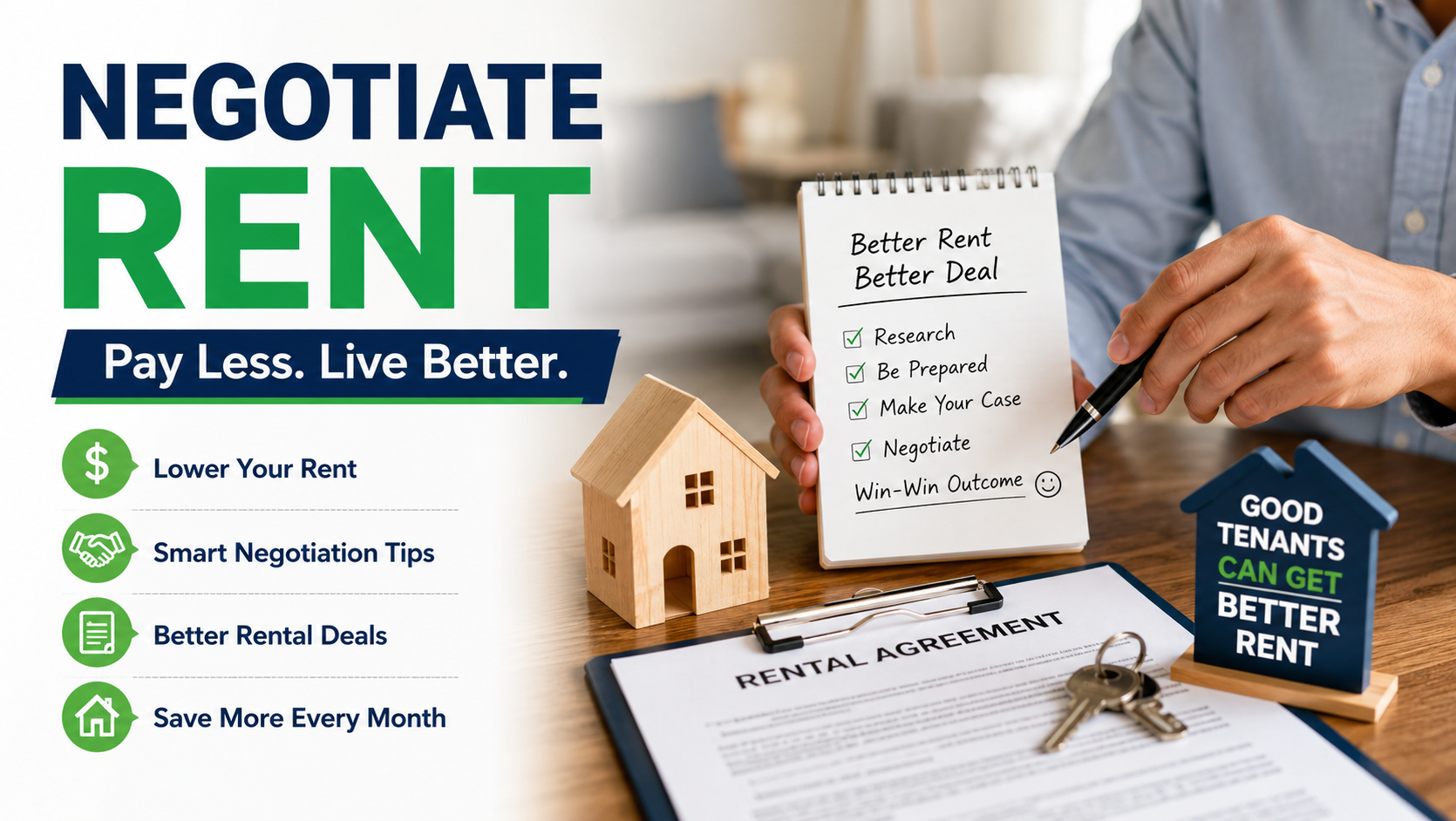
Most renters sign the lease, pay whatever number is on the listing, and never stop to ask whether that number was actually fixed in stone. It usually isn’t. Here’s the part nobody tells you at the open home: rent is far more negotiable than it looks. You just need to know when to push, how to push, and what to actually say when you do it.
If you’ve never tried to negotiate rent before, the whole idea can feel a bit awkward, almost like you’re asking for a favour you don’t deserve. But here’s the thing , landlords and property managers negotiate rent constantly, with other applicants, with vacancies, with shifting market conditions. There’s genuinely no reason you shouldn’t be part of that conversation too.
This guide walks through exactly how to negotiate rent in Australia, whether you’re applying for a brand-new place, coming up for a lease renewal, or pushing back against a rent increase notice that just landed in your inbox and ruined your morning.
Visit now: https://rentcalculatorpro.com/
Why Rent Negotiation Is More Common Than You’d Think
A lot of renters assume the listed price is final. It rarely is. Agents often price a property slightly above what they actually expect to accept, especially during slower rental periods, because it’s much easier to come down in price than to go up later. When you decide to negotiate rent, you’re not doing anything unusual, and you’re certainly not being rude. You’re simply stepping into a process that happens constantly behind the scenes , just usually without the tenant anywhere in the room.
Vacancy is the biggest driver here. An empty property costs a landlord real money every single week it sits unoccupied. If a place has been listed for three or four weeks without a single application, the owner is losing far more than they’d ever lose by accepting a slightly lower offer from you. This is exactly the kind of situation where you have real leverage to push for a lower figure, because the numbers are working in your favour, not the landlord’s.
Seasonal timing matters too, more than most people realise. Rental demand tends to soften in winter months and around major holidays, when fewer people are actively moving house. If you happen to be house-hunting in one of those quieter periods, that’s often the best window to ask for a discount, simply because there’s less competition pushing the price back up.
When You Should Try to Negotiate Rent
Timing changes everything when it comes to rent negotiation. There are a few specific moments where your chances of success genuinely go up.
Before you sign a new lease. This is by far the easiest point to negotiate rent, because nothing has been finalised yet. Once you’ve signed, you’ve accepted the terms, and asking for a lower figure afterward becomes a much harder, much more awkward conversation. If a property’s been sitting on the market a while, the photos look a little dated, or it’s listed slightly above comparable properties nearby, that’s your opening.
At lease renewal time. If you’ve been a reliable tenant , paid on time, kept the place in good condition, never caused headaches for the property manager , you have genuine leverage when your lease comes up for renewal.
Landlords generally prefer keeping a known, low-maintenance tenant over risking a vacancy and the real costs of re-advertising, cleaning, and screening new applicants from scratch. This is a natural moment to push back on the number, especially if the proposed renewal figure feels out of step with the local market.
When you receive a rent increase notice. This is where most Australians attempt to negotiate rent for the very first time. A notice arrives, the number’s higher than expected, and the instinct is either to panic or just accept it quietly. Neither reaction is necessary. You’re allowed to respond to a rent increase and ask the landlord to reconsider, particularly if you can show the proposed rent doesn’t actually match what similar properties nearby are renting for.
When the property has visible drawbacks. A leaking tap, an ageing kitchen, no air conditioning through a brutal summer, or a noisy main road right out front are all completely legitimate reasons to negotiate rent below the asking price. You’re not being difficult by pointing these things out , you’re simply pricing the property accurately.
Doing Your Homework Before You Negotiate Rent
Nothing weakens a negotiation faster than showing up empty-handed with no evidence behind you. If you want to negotiate rent successfully, you need to walk in with numbers, not just a vague feeling that the price seems a bit high.
Start by looking at what comparable properties in the same suburb , on the same street, ideally , are currently listed for. Domain and realestate.com.au both let you filter by suburb, bedroom count, and property type, which gives you a fairly realistic picture of where the market actually sits right now. If three similar two-bedroom units nearby are listed for less than the one you’re interested in, that’s concrete evidence you can use to negotiate rent down to a fairer figure.
It also helps to check how long the property’s actually been listed. A property that’s been sitting for a month is a very different conversation to one that went up three days ago. Long listing times are one of the strongest signals that you have real room to negotiate rent, because the property manager is likely already under pressure from the owner to secure a tenant.
If you’re already renting somewhere and preparing to negotiate rent at renewal, or after an increase notice, gather your own payment history too. Show that you’ve never missed a payment, never lodged unnecessary maintenance complaints, and kept the place genuinely well maintained. Tenant reliability is worth more than most renters realise, and it’s one of your strongest cards when you finally sit down to negotiate rent.
Before any conversation, it also helps to run the numbers yourself first. Using a rent calculator to work out what a proposed increase actually means annually, not just weekly, often makes the whole case a lot clearer. A jump of $20 a week doesn’t sound like much on its own, until you see it adds over $1,000 a year to what you’re paying. Having that figure ready makes it much easier to negotiate rent from an informed position rather than a purely emotional one.
How to Approach the Conversation
Honestly, tone matters just as much as the actual numbers you’re bringing to the table. Property managers talk to dozens of tenants every week, and the ones who stay calm and polite almost always get further than the ones who come in with an attitude. If you actually want to negotiate rent successfully, think of it less like a fight and more like a normal business conversation , because that’s really all it is.
Keep the opening simple. You genuinely don’t need a paragraph explaining your life story here , in fact, over-explaining usually works against you. A short, polite message beats a long dramatic one every single time. Something like:
“I’m really interested in this property and would love to move forward. Would you be open to $20 less per week, based on similar listings nearby?” Notice what that one line is doing , it shows you’re interested, it names a number, and it gives a reason. That’s basically the whole formula for rent negotiation, every time: interest, number, reason. Nothing fancier than that.
What you want to avoid is something vague like “is there any flexibility on price?” That question just dumps the work back onto the property manager , they have to guess what you actually want, and most of the time, a busy agent will just say no because it’s the path of least resistance. So be specific. Don’t dance around it, just name your figure.
And a small tip most people overlook: send it in writing. Email, or the messaging system on the rental platform, works better than calling. It gives the property manager breathing room to actually think it through and check with the owner instead of feeling put on the spot. Plus, you end up with a paper trail, which can genuinely save you a headache later if anyone forgets what was agreed.
What to Say When You Negotiate Rent for a New Lease
If you’re applying for a place and want to negotiate rent before you’ve signed anything, timing is everything here. Send your offer along with the application itself, not after you’ve already been told you’re approved. Property managers are much more open to a lower number while they’re still weighing up candidates and want an easy way to close things out quickly.
There’s also a trick a lot of renters miss , you can sweeten the deal instead of just asking for less. Landlords love certainty more than almost anything. So if you can offer a 12-month lease instead of 6, move in a bit earlier than they asked, or put down a slightly bigger bond, all of that gives them a real reason to say yes when you negotiate rent. You’re not just haggling , you’re trading something back.
Here’s a script you could basically copy: “We love the property and would like to apply for a 12-month lease. Based on similar properties currently listed in the area, would you consider $480 per week instead of $500? We can move in as early as the 1st and have strong rental references.” Short, backed by reasoning, and makes it easy for them to just say yes.
What to Say When You Negotiate Rent at Renewal
Renewals are a bit different, and honestly a bit easier, because you already have proof behind you , you’ve actually lived there. Use that. As soon as your renewal date starts getting close, reach out first, before they send you their offer. Getting ahead of it like that quietly signals you’re on top of things.
Try something like: “As my lease comes up for renewal, I wanted to check in early. I’ve really enjoyed living here and always paid on time. Given current market listings for similar properties nearby, I was hoping we could keep the rent at its current rate, or discuss a smaller increase than what might normally apply.” It’s friendly, it’s not confrontational, and it still lets you negotiate rent from a place of goodwill rather than tension.
Read more: Rent Budgeting in Australia: The Honest Guide to Making Your Money Actually Stretch
Responding to a Rent Increase Notice
When that increase notice lands in your inbox, you don’t have to just nod and accept it, even though it’s tempting to. Every state has its own rules around how much notice a landlord has to give and how often rent can go up, so it’s worth a quick check on your local tenancy laws before you write back to anyone. Once you know where you actually stand legally, you’ll have a much better sense of how hard you can push.
If the new figure just doesn’t line up with what similar places nearby are charging, that’s your opening. Write back quickly, point to a couple of comparable listings, and suggest a smaller number instead of just saying “this feels too high.” Numbers win arguments , complaints usually don’t.
It also doesn’t hurt to gently remind them who you’ve been as a tenant, without turning it into a threat. If losing you and finding someone new would genuinely cost the landlord more than just meeting you halfway, that’s a practical, business-minded point , and those tend to land a lot better than emotion does when you’re trying to negotiate rent.
Common Mistakes That Sink a Negotiation
Even good-faith attempts to negotiate rent can fall apart if you make a few avoidable mistakes along the way.
Asking for too much too soon is the most common one. If comparable properties are only slightly cheaper, don’t ask for a discount that’s wildly out of proportion to that gap. It signals you haven’t actually done your research, and it quietly damages your credibility for the rest of the negotiation.
Being vague is another. As mentioned earlier, “can you do better on price?” rarely gets a useful response from anyone. Always attach a specific number when you negotiate rent, because that’s something a property manager can actually act on.
Threatening to walk away without genuinely meaning it is also risky territory. If you say you’ll withdraw your application and the landlord calls your bluff, you’ve lost your leverage entirely, and there’s no getting it back. Only use that approach if you’re truly willing to look elsewhere.
Finally, negotiating too late in the process , after you’ve already signed something or verbally agreed to terms , puts you in a much weaker position than you’d like. The best time to negotiate rent is always before commitments are locked in, never after.
Using Data to Strengthen Your Position
The strongest negotiations aren’t built on gut feeling, they’re built on numbers. Before you try to negotiate rent, it’s worth running a few quick calculations first, so you know exactly what you’re asking for and why you’re asking for it.
Work out what a weekly figure actually costs annually, since small weekly differences add up more than they appear to at first glance. Compare the property’s price per square metre or per bedroom against similar listings nearby. If you’re weighing up a renewal, calculate what percentage increase is actually being proposed, since a jump that sounds small in dollar terms can still represent a steep percentage rise over the year.
All of this turns a subjective request into an objective, evidence-backed case , and it’s a lot harder for a property manager to dismiss numbers than it is to dismiss a feeling.
Rent calculators are genuinely useful here, not just for everyday budgeting but for building your entire negotiation case. Converting a weekly figure into its monthly and yearly equivalents, or checking how a proposed rent compares against the standard affordability guideline of around 30 percent of gross income, gives you concrete talking points to work with. When you sit down to negotiate rent, having these figures ready shows you’ve done your homework and makes your request far easier for anyone to take seriously.
What Happens If the Negotiation Doesn’t Work
Not every attempt to negotiate rent ends in a discount, and that’s genuinely worth preparing for mentally before you even start the conversation. If the property manager says no, you still have options left on the table.
You can ask what would actually make the number work , sometimes a longer lease term or an earlier move-in date changes their answer completely. You can also simply decide whether the original price is still worth it to you, without any hard feelings attached either way. Not every negotiation needs to end in a win to have been worth attempting; even if you don’t manage to negotiate rent down this time, you’ve lost nothing at all by asking politely.
If you’re facing a genuinely unreasonable rent increase and negotiation truly fails, it’s worth researching your rights around disputing an increase through your state’s tenancy tribunal or civil and administrative body. This is usually a last resort, but it exists precisely for situations where a proposed rent is well above market value and informal negotiation simply hasn’t worked.
Building Long-Term Leverage as a Tenant
The best position to negotiate rent from isn’t built in a single conversation , it’s built slowly, over the entire life of a tenancy. Paying on time every single period, communicating early about any issues, keeping the property tidy, and generally being easy to deal with all compound into real leverage when renewal time eventually comes around.
Property managers remember which tenants make their job easier, and that memory is worth more at negotiation time than almost anything else you could bring to the table.
If you’re a longer-term tenant thinking ahead, it’s worth periodically checking how your current rent compares to the market, even outside of renewal periods. Rental markets shift throughout the year in ways that aren’t always obvious from the inside, and knowing where you stand means you’re never caught off guard the next time it’s time to negotiate rent again.
Negotiating Rent in a Shared Household
Share houses throw a bit of a curveball into all of this, mostly because you’re often not the only name on the lease, and the property manager might not even want to deal with you directly if you’re not the primary tenant. If you’re the one leading the charge on behalf of the whole household, do yourself a favour and get everyone on the same page before anyone reaches out to the landlord. Seriously,
nothing kills a negotiation faster than one housemate firing off their own message with a totally different number, or a totally different tone, right after yours.
Here’s something people don’t think about enough , applying as a group can actually work in your favour, more than most renters realise. A household of three or four people, all employed, all with solid references, just looks safer to a landlord than one person applying alone. And that lower risk is exactly what makes an owner willing to bend a little on price.
So if you’re applying together, don’t be shy about pointing that out directly in your offer , it’s not something a property manager will necessarily notice on their own while flipping through a stack of applications.
When renewal season rolls around in a shared place, it’s worth having a quick chat with your housemates first , is everyone actually staying, or is someone planning to move on? Because if people are leaving and need replacing, that changes the whole risk picture for the landlord, and honestly makes them a lot less flexible on price, since now they’re stuck re-screening strangers. But if the whole household is staying, no gaps, no unknowns , that’s genuinely the strongest spot you can be negotiating from.
And if you’re the type who uses a rent split calculator to keep things fair between housemates, don’t forget to run it again whenever the total rent shifts, whether that’s because you scored a discount or because an increase actually went through. It’s a small step, but it saves everyone that awkward “wait, who owes what now” conversation later, and it keeps the household aligned before the next time this whole process needs to happen again.
Read more: Lease Break Costs in Australia: What It Really Costs to Walk Away Early
Conclusion
At the end of the day, trying to get a better deal on rent really isn’t about being pushy or being that difficult tenant nobody wants to deal with. It’s just… treating a big financial decision the way you’d treat any other big financial decision , do a bit of research, ask clearly for what you want, and stay respectful while you do it.
Doesn’t matter if you’re signing somewhere new, renewing where you already are, or pushing back on a surprise increase , the same handful of principles carry you through every time. Know what the market’s actually doing. Know that you bring value as a tenant. Say exactly what you want. And give the other person an easy reason to just say yes.
Most people never even bother asking. They see a number on a listing, figure that’s just how it is, and move on with their week. But the renters who do ask , calmly, with a bit of evidence behind them , are often surprised by how much room there actually was to move. So the next time you’re staring down a new lease or a renewal letter, don’t talk yourself out of it. Worst case? You get a no, and you’re right back where you started, no harm done. Best case? You’re pocketing real savings every single week for as long as that lease runs.
FAQ,s
1. Is it legal to negotiate rent in Australia?
Yes, completely. There’s no law stopping you from asking a landlord or property manager for a lower rent, whether it’s before signing a lease, at renewal, or after an increase notice. It’s simply a conversation, not a legal process.
2. How much rent reduction can I realistically ask for?
Most successful negotiations land somewhere between 3% and 10% off the listed price, depending on how long the property’s been vacant and how it compares to similar listings nearby. Asking for anything beyond that usually needs a strong reason behind it.
3. Should I negotiate rent in person or over text/email?
Written communication is generally the safer bet. It gives the property manager time to check with the owner, and it leaves a clear record of what was actually agreed, which can help if there’s ever a mix-up later.
4. Does having a pet make it harder to negotiate rent?
It can, since some landlords factor in extra wear and tear. But offering a slightly higher bond or agreeing to professional carpet cleaning at the end of the lease can often offset that concern and keep your negotiating position intact.
5. Can I negotiate rent if I have no rental history?
Yes, though it’s a bit harder without references to lean on. In that case, focus on other strengths, like stable income, employment letters, or a guarantor, and be upfront that you’re new to renting but financially reliable.
6. What if the property manager says the owner won’t budge at all?
Ask if there’s flexibility on anything else instead, like a rent-free week, included utilities, or minor repairs being done before move-in. If price truly can’t move, other terms sometimes can.
7. Is it rude to negotiate rent on a property I really want?
Not at all. Property managers expect some back-and-forth, especially in a slower market. A polite, well-reasoned offer doesn’t put your application at risk, it just opens a conversation.
8. Can I negotiate rent if I’m renting through a real estate agency versus a private landlord?
Both are negotiable, but private landlords sometimes have more flexibility since they’re not managing dozens of properties or following strict internal pricing rules like larger agencies often do.
9. Will negotiating rent hurt my chances of getting the property?
Rarely, as long as the request is reasonable and respectful. What actually hurts your chances is being vague, demanding, or asking for a discount with no justification behind it.
10. How do I know if a rent increase is actually reasonable?
Compare it against similar properties currently listed in your suburb. If the new figure sits noticeably above what comparable places are charging, you likely have grounds to push back.
11. Can a landlord refuse to negotiate and just re-list the property instead?
Yes, that’s always a possibility, especially in high-demand areas. This is exactly why doing your market research beforehand matters, so your offer feels reasonable rather than lowball.
12. Is it better to negotiate rent before or after a property inspection?
Usually after, once you’ve seen the place in person and can reference specific things, like condition, features, or drawbacks, that support your offer.
13. Should I mention other cheaper listings by name when negotiating?
You don’t need exact addresses, but referencing that “similar properties nearby are listed for less” is usually enough to make your point without sounding like you’re trying to pit properties against each other.
14. What’s a polite way to follow up if I haven’t heard back after asking to negotiate rent?
A simple message like “Just following up on my earlier message, happy to answer any questions” after a few days works well. Avoid sounding impatient or pushy.
15. Can students or first-time renters negotiate rent too?
Absolutely. Being upfront about limited rental history while highlighting stable income, a guarantor, or willingness to pay a larger bond can still make for a strong negotiating position.