
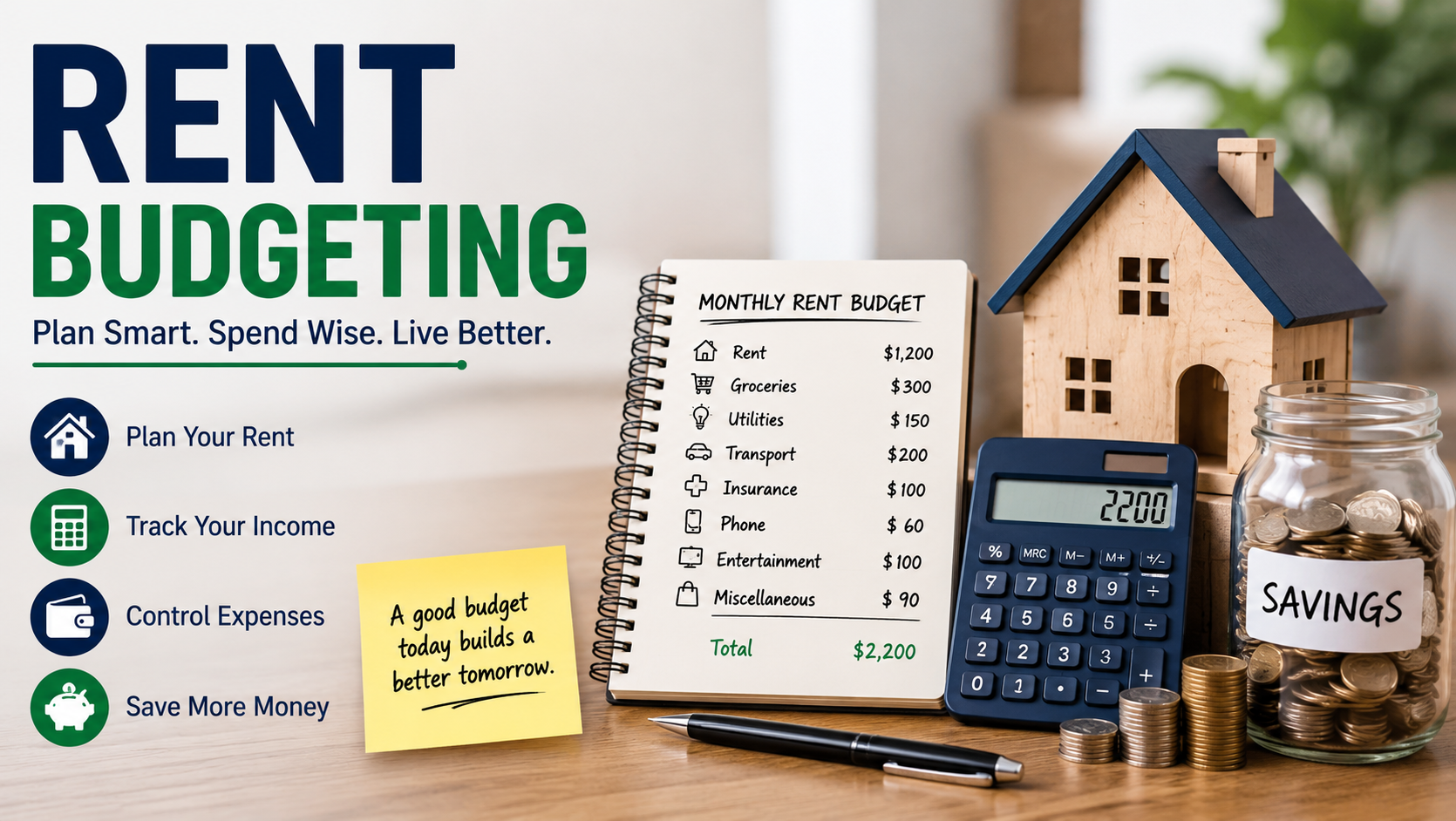
Most people don’t really plan their rent budgeting. They see a number on a listing, do a quick mental sum, and hope for the best. Then the first pay cycle after moving in hits, and suddenly there’s a lot less left over than expected. This is the moment when it stops being a nice idea and becomes something you actually have to sit down and work through, properly, with real numbers instead of guesses.
Rent budgeting isn’t complicated in theory. It’s just the process of matching what you earn to what you spend on housing, and making sure everything else , food, transport, bills, savings , still fits. But in practice, especially in Australia’s current rental market, this has become a genuine skill. It takes more than a rough guess and a bit of hope. It takes a system.
This guide walks through exactly how to approach it from the ground up, without the fluff, without pretending there’s a magic formula that solves everything, and without assuming you already have a finance degree.
Visit now: https://rentcalculatorpro.com/
Why Rent Budgeting Matters More Than It Used To
A decade ago, planning around rent was simpler because rent itself moved slowly. Wages and rent grew at roughly similar speeds, so the gap between the two didn’t feel like it was widening every few months. That’s not the world renters live in now. Rental prices across most Australian cities have climbed faster than incomes, which means the old habit of “just don’t spend too much on rent” isn’t enough anymore. Rent budgeting today has to account for a market that moves quicker than your payslip does.
There’s also the fact that everything around rent has gotten more expensive too. Utilities, groceries, insurance, transport , all of it eats into the same pool of money that a good plan is trying to protect. So when people talk about managing rent now, they’re not just talking about affording the weekly or monthly figure. They’re talking about affording rent and still having a functional life around it.
This is why the whole approach has shifted from being a background task to something that deserves actual attention. Skipping it, or doing it loosely, tends to catch up with people within a few months of moving somewhere new.
The 30% Rule, and Why Rent Budgeting Shouldn’t Stop There
Anyone who has looked into rent budgeting has probably run into the 30% guideline , the idea that rent shouldn’t exceed 30% of your gross income. It’s a decent starting point, mostly because it’s easy to remember and gives you a rough ceiling to aim under.
But treating this rule as the entire process is where a lot of people go wrong. The 30% figure was built around average assumptions: average bills, average transport costs, average lifestyle. It doesn’t know that you drive forty minutes to work, or that you’re paying off a car loan, or that you send money home every month, or that your job pays casually and some weeks are lighter than others.
Good rent budgeting uses the 30% rule as a first checkpoint, not a final answer. If your rent lands under that mark, that’s encouraging, but it doesn’t mean the budget automatically works. If it sits above 30%, that doesn’t automatically mean disaster either , some people manage 35% or even 40% comfortably because their other expenses are low. The plan has to look at your actual numbers, not a percentage borrowed from a general guideline.
Step One of Rent Budgeting: Know Your Real Income
This sounds obvious, but it’s the step most people rush through. Effective rent budgeting starts with your actual take-home income, not your advertised salary. If you’re on a fixed annual wage, this is fairly simple , take your after-tax pay and break it down to whatever cycle matches your rent payments, whether that’s weekly, fortnightly, or monthly.
If your income is less predictable , casual shifts, freelance work, seasonal contracts , this gets trickier, but it’s still doable. The trick here is to base your plan on your lowest realistic income month, not your best one. If you build it around a great month and then a slow month arrives, you’re immediately behind. Build it around the lean months instead, and let the good months become breathing room rather than the baseline.
This single adjustment , planning against your worst month instead of your best , is probably the biggest difference between rent budgeting that works long-term and a plan that quietly falls apart after two or three months.
Step Two: List Every Fixed Cost Before You Touch Rent
Good rent budgeting doesn’t happen in isolation. Before you even lock in a rent figure, you need a clear list of what’s already spoken for. This includes things like:
- Loan repayments (car, personal, student debt)
- Insurance (car, health, contents)
- Phone and internet plans
- Subscriptions you’re not going to cancel
- Transport costs to get to work
Once these fixed costs are written down, the whole plan becomes a lot more grounded. You’re no longer asking “can I afford this rent in general,” you’re asking “can I afford this rent after everything else that’s already locked in.” That’s a completely different question, and it’s the one that actually matters.
A common mistake is calculating affordability based on gross income minus rent, forgetting that a chunk of what’s left is already earmarked for things that aren’t optional. Fixing this one habit alone solves a huge chunk of budgeting problems before they start.
Step Three: Build In the Costs People Forget
This is where rent budgeting quietly breaks down for a lot of renters. It’s not the rent itself that causes trouble , it’s everything sitting just outside the rent figure that nobody accounted for.
Utilities. Electricity, gas, and water aren’t always included in rent, and even when they’re separate, the amounts vary a lot by season. Your plan needs to assume winter power bills, not spring ones, because winter is when the bill actually spikes.
Bond and upfront costs. People often focus on the ongoing weekly or monthly figure and forget the upfront hit , bond, rent in advance, sometimes a connection fee for utilities. These costs land all at once, right when your bank account is already stretched from moving expenses.
Groceries that aren’t “average.” Generic budgeting guides assume a flat grocery figure, but a realistic plan should reflect what you actually spend, including the weeks where you eat out more or stock up on non-food essentials.
Irregular expenses. Car registration, annual insurance renewals, birthdays, medical costs , these don’t happen every month, but they happen every year, and proper rent budgeting spreads them out across the months instead of treating them as surprises.
Ignoring these categories is the single most common reason a rent budget looks fine on paper and then fails within the first two or three months of actually living somewhere.
Step Four: Build a Buffer Into Your Rent Budgeting
A plan with zero buffer isn’t really a plan , it’s a hope. Life doesn’t move in straight lines. Shifts get cut, bills come in higher than expected, a car needs a repair the same week rent is due. Rent budgeting that doesn’t account for this kind of variability tends to collapse the first time something goes slightly wrong.
A reasonable target is to treat a small buffer , even just a modest weekly amount set aside , as a fixed cost, the same as rent or insurance. Not an afterthought, not “whatever’s left over,” but a line item that gets paid to yourself before anything discretionary happens. Over a few months, this buffer becomes the difference between a bad week being mildly annoying and a bad week becoming a genuine financial crisis.
This is one of the parts people skip most often, mainly because it doesn’t feel urgent until the exact week it becomes urgent.
Rent Budgeting for Share Houses
Splitting a lease changes the shape of this whole exercise quite a bit. Instead of one person managing one number, you’ve got multiple incomes, multiple habits, and multiple opinions about what counts as a “shared” cost.
Good rent budgeting in a share house starts with agreeing on the split method before moving in , equal shares, room-size-based shares, or income-based shares. Whichever method gets chosen, it needs to be written down somewhere everyone can see, because vague verbal agreements are where things quietly fall apart.
Beyond the rent split itself, a shared household also needs a clear system for utilities and shared groceries. Some households pool a fixed amount each week into a shared account; others split bills individually as they arrive. Either way works, but it only holds together when everyone agrees on the system upfront rather than negotiating it every single time a bill lands.
Rent Budgeting on a Casual or Variable Income
If your income changes week to week, rent budgeting needs a different structure than the standard “percentage of income” approach. The safest method here is averaging your income over the last three to six months and using that average , not your best week, not your worst , as the number you build your plan around.
From there, budgeting for variable income benefits enormously from a simple buffer account. In stronger weeks, extra income goes into this account. In weaker weeks, the shortfall gets pulled from it. This smooths out the natural bumps of casual work without requiring you to constantly renegotiate your numbers every single pay cycle.
Renters on casual income also benefit from a plan that leaves a slightly bigger safety margin than the standard guideline suggests. If a fixed-income renter might comfortably manage at 30%, someone with variable income is often better off aiming a little under that, simply because their income floor is less predictable.
Common Rent Budgeting Mistakes Worth Naming
Budgeting off gross income instead of take-home pay. This single mistake inflates what people think they can afford before the numbers even properly add up.
Ignoring irregular annual costs. Registration, insurance renewals, and similar costs get forgotten because they don’t show up monthly, even though a good plan should still account for them.
Assuming rent won’t increase. A plan built around today’s rent figure, with zero room for a future increase, tends to fall apart at lease renewal. Building in a small annual buffer for a potential rent increase keeps this from becoming a shock.
Forgetting moving costs happen more than once. Bond, removalists, connection fees , these aren’t one-time life events for most renters. Assuming you’ll never move again is optimistic in a way the rental market rarely rewards.
Treating savings as optional. Even a small, consistent amount set aside toward savings changes the entire trajectory of your financial position over a year or two, compared to treating savings as whatever happens to be left over.
Using Tools to Make Rent Budgeting Easier
Doing all of this manually with a notebook and a calculator is possible, but it’s slow, and mistakes creep in easily. This is where dedicated calculators genuinely earn their place , not as a gimmick, but as a way to remove the guesswork from conversions and percentages.
A calculator that converts weekly rent into its monthly and yearly equivalents, checks your figures against the standard affordability guideline, and estimates bond and upfront costs takes a lot of the manual error out of the process. Instead of estimating in your head whether $480 a week fits your monthly numbers, a proper tool gives you the exact figure instantly, along with how it compares to your income.
The value of these tools isn’t that they replace thinking about your budget , it’s that they remove the arithmetic mistakes that quietly wreck otherwise solid plans. Once the numbers are accurate, the actual decision-making becomes much clearer.
Rent Budgeting Around a Potential Rent Increase
A good plan shouldn’t only reflect the number on your current lease. Rents move, and in most Australian markets right now, they tend to move upward more often than they move down. A rent budgeting plan that leaves absolutely zero room for a future increase is fragile by design.
A practical approach is to build your budget around your current rent, but stress-test it against a modest hypothetical increase , say, an extra 5–10% , before you sign a longer lease or make big financial commitments elsewhere. If your plan can absorb that kind of increase without falling apart, you’re in a genuinely stable position. If it can’t, that’s useful information before you’re locked into a twelve-month agreement, not after.
This kind of forward-looking rent budgeting also helps during lease renewal negotiations. Knowing exactly how much room you have before an increase becomes unaffordable gives you a clearer, calmer position to negotiate from, rather than reacting emotionally to whatever number turns up in the renewal email.
Long-Term Habits That Keep Rent Budgeting on Track
A budget isn’t a one-time task you complete when you move in and then forget about. It works best as an ongoing habit, revisited every few months rather than left untouched for a year.
Review it after any income change. A pay rise, a job change, reduced hours , any of these should trigger a quick revisit of your numbers, not just a mental note that things feel a bit different now.
Review it before every lease renewal. This is the natural checkpoint to check whether your assumptions from a year ago still hold up, especially if a rent increase is on the table.
Track actual spending against the plan occasionally. A budget built entirely from estimates drifts over time. Checking real bank statements against your original plan every few months keeps the numbers honest.
Adjust the buffer as life changes. A buffer that made sense as a single renter might not be enough once you’re supporting a partner, a pet, or a car repayment. Good rent budgeting evolves instead of staying frozen at the number you first calculated.
None of these habits take much time individually, but together they’re what separates rent budgeting that holds up over years from a plan that quietly stops matching reality within a few months.
Rent Budgeting for Students and Families
The right approach looks different depending on who’s doing it, and two groups in particular tend to face very different pressures: students and families.
For students, rent budgeting usually has to work around part-time or casual income, study commitments that limit available work hours, and sometimes support from family that isn’t guaranteed to stay consistent. A student’s plan benefits from being deliberately conservative , assuming fewer work hours than the timetable ideally allows, and treating any extra shifts as a bonus rather than the baseline. Share housing is common in this group, which means the share-house principles covered earlier apply directly: a clear split, an agreed system for bills, and everything written down rather than assumed.
For families, the numbers have more moving parts by definition. School costs, childcare, larger grocery bills, and less flexibility to suddenly downsize or relocate all change the shape of the plan. Families tend to benefit from a longer planning horizon , thinking in terms of the next year or two rather than just the current lease , because decisions like changing schools or shifting suburbs carry more weight than they would for a single renter. Families also often carry a wider range of fixed costs, so the “list every fixed cost” step from earlier in this guide matters even more here, since a missed recurring expense has a bigger ripple effect on the overall budget.
In both cases, the core logic of rent budgeting doesn’t change , real income, real fixed costs, a buffer, regular reviews , but the weighting shifts depending on how much flexibility the household actually has to absorb a surprise.
Rent Budgeting and Your Mental Load
There’s a side to rent budgeting that rarely gets mentioned: the mental toll of constantly worrying about whether the numbers will work. Renters who never build a proper system often carry a low-level anxiety about money that shows up every time a bill arrives or rent is due, even if they can technically afford it.
A clear plan doesn’t just protect your bank balance , it removes a lot of that background noise. When you know your numbers work, including the buffer, including the irregular costs, a rent increase or an unexpected bill becomes a manageable event instead of a moment of panic. This is arguably one of the most underrated benefits of proper rent budgeting: it’s not only about the math, it’s about being able to open a bill without your stomach dropping.
Read more: Rent Affordability: The Real Guide to Knowing What You Can Actually Pay
Bringing It All Together
Rent budgeting isn’t about finding one perfect number and sticking to it forever. It’s a process , checking your real income, listing your actual fixed costs, accounting for the expenses people usually forget, building in a buffer, and revisiting the whole thing regularly as life shifts around you. Renters who treat it this way tend to move through rent increases, slow income weeks, and unexpected bills without it turning into a crisis every time.
The renters who struggle most usually aren’t the ones with the tightest budgets , they’re the ones who never built a real plan in the first place, and instead just hoped the numbers would work out. A little structure, a realistic view of your income, and a habit of revisiting your rent budgeting every few months goes a long way toward making sure rent stays a manageable part of your life, instead of the thing that quietly runs it.
FAQ,s
1. What is rent budgeting?
Rent budgeting is the process of matching your real income against your rent and other living costs so you know exactly what you can afford, instead of guessing based on a listing price alone.
2. How much of my income should go toward rent?
A common starting point is 30% of your gross income, but this is just a guideline. Your actual comfortable limit depends on your fixed costs, debts, and how stable your income is.
3. Should I budget based on gross income or take-home pay?
Always use take-home pay. Budgeting off gross income overestimates what you can actually afford, since tax is never available to spend on rent.
4. What if my income isn’t steady every month?
Base your plan on your lowest realistic income month rather than your best one. Treat stronger months as bonus buffer instead of the baseline you rely on.
5. What expenses do people usually forget when budgeting for rent?
Seasonal utility spikes, bond and upfront moving costs, irregular annual expenses like insurance or registration, and the mental buffer for unexpected bills are the most commonly overlooked.
6. How big should my rent buffer be?
There’s no fixed number, but treating even a small weekly amount as a non-negotiable “cost,” the same as rent itself, is enough to absorb most minor financial surprises.
7. How do I split rent fairly in a share house?
Agree on a method upfront , equal shares, room-size-based, or income-based , and write it down so nobody has to renegotiate it every time a bill comes in.
8. How often should I review my rent budget?
Ideally after any income change, before every lease renewal, and every few months in general just to check your numbers still match reality.
9. Should I plan for a rent increase in advance?
Yes. Stress-testing your budget against a modest hypothetical increase before signing a lease helps you know whether you can absorb it if it happens.
10. Is a rent calculator actually useful, or can I just do the math myself?
A calculator mainly removes arithmetic errors , converting weekly to monthly, checking affordability percentages, and estimating bond costs instantly instead of manually, which reduces small mistakes that add up.
11. How is rent budgeting different for casual or part-time workers?
It relies more heavily on averaging income over several months rather than a single pay cycle, and usually benefits from a slightly bigger safety margin than the standard guideline.
12. Do students need a different approach to rent budgeting?
Yes , student budgets should generally be built conservatively around limited work hours, treating any extra shifts as a bonus rather than something to depend on.
13. How does having a family change the way I should budget for rent?
Families typically carry more fixed costs and benefit from planning further ahead, since decisions like changing schools or suburbs carry more weight than for a single renter.
14. What’s the biggest mistake people make with rent budgeting?
Assuming rent won’t increase and building a plan with zero room for that possibility, which usually causes problems at lease renewal time.
15. Does a good rent budget actually reduce financial stress?
Yes , beyond the numbers, having a clear plan removes a lot of the background anxiety that comes from not knowing whether a bill or rent increase will actually fit.