
Most people find out their the hard way. They fall in love with an apartment because of the natural light in the kitchen, sign the lease before they’ve really sat down and done the math, and then spend the next six months eating instant noodles and wondering where the paycheck went. Nobody sits them down beforehand and says, “hey, let’s actually work out your rent affordability before you commit to anything.” So they guess. And guessing with something this big is a rough way to run your finances.
Here’s the thing though , isn’t some fancy term reserved for economists or property analysts crunching numbers on a spreadsheet somewhere. It’s just the answer to a very ordinary question: how much rent can you actually pay each week or month without wrecking the rest of your life? That’s really all it is. But somehow this simple idea gets buried under vague advice, outdated rules of thumb, and rental listings that never tell you the full picture anyway.
If you’ve ever felt a small knot in your stomach on rent day, even though technically “you can afford it” , that feeling is worth paying attention to. It usually means your rent affordability looks fine on paper but doesn’t feel fine in real life. There’s a difference between rent affordability that survives a spreadsheet and rent affordability that survives an actual bad week, with a flat tyre and a dentist bill thrown in for good measure. This guide is really about the second kind. Not the version that just ticks a box before you sign, but the version that still holds up three months later when something unexpected happens, because something always does.
Visit now: https://rentcalculatorpro.com/
What Rent Affordability Actually Means
At its core, rent affordability is about balance. It’s the relationship between what you earn and what you’re willing , and able , to hand over for a roof over your head, without starving everything else you need money for. People usually reduce this down to a single percentage, but that number means almost nothing without context around it.
Think about it this way. Two people can earn exactly the same salary and still have completely different rent affordability. One has no debt, no dependents, and lives a short walk from work. The other is paying off a car loan, helping out a sibling, and driving forty minutes each way, burning fuel money the whole time. Same income on paper. Totally different rent affordability once you look under the hood. This is exactly why blanket rules never tell the whole story, even if they’re a decent enough starting point.
And isn’t something you calculate once and forget about either. It shifts as your life shifts. A pay rise, a new expense, a change in household size , all of it moves the rent affordability needle, sometimes without you even noticing until the numbers stop adding up.
The 30% Rule (And Why It’s Only Half the Story)
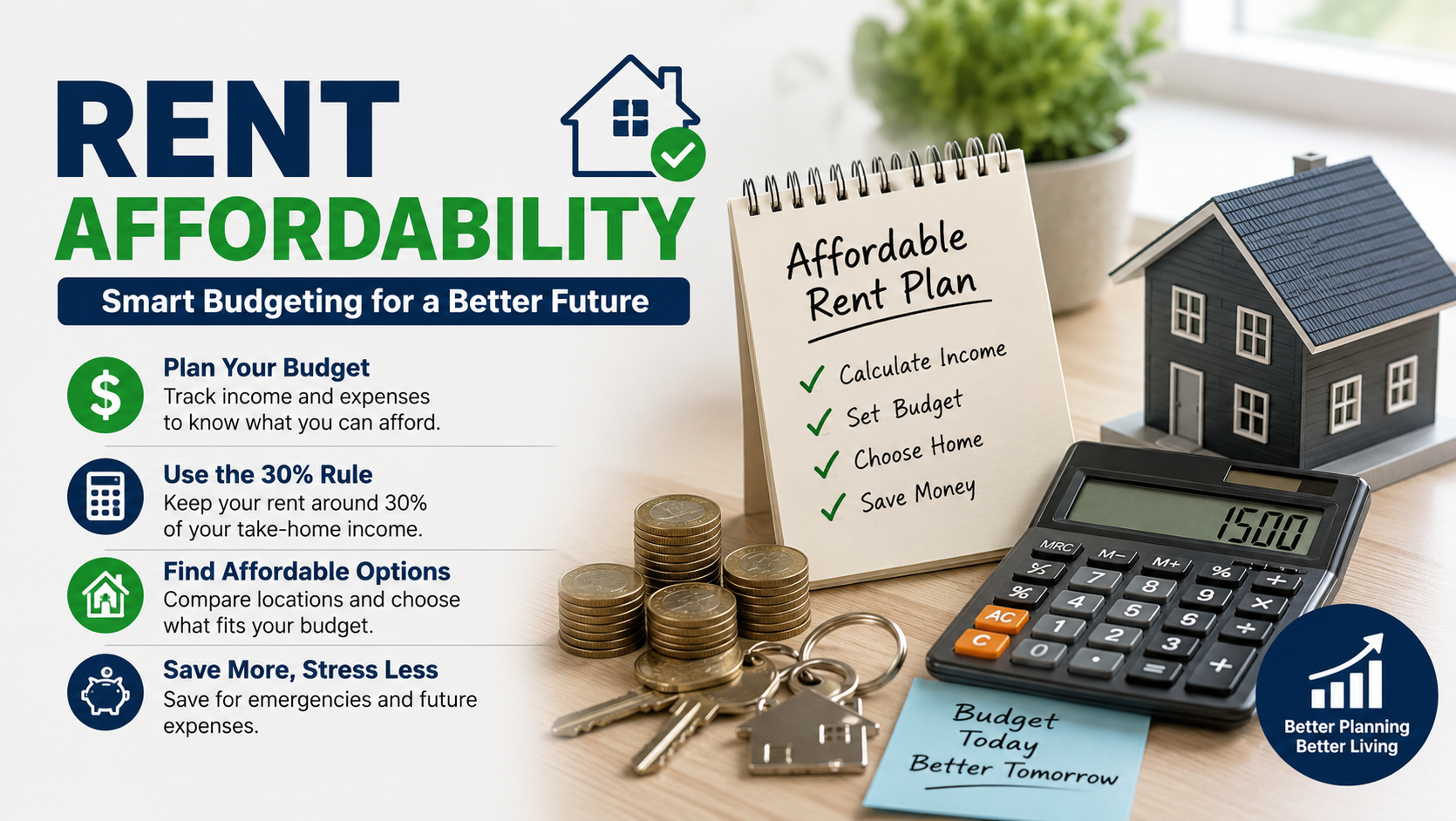
If you’ve searched anything to do with rent affordability, you’ve run into the 30% rule. Spend no more than 30% of your gross income on rent, and you’ll supposedly be fine. It gets repeated so often people treat it like some kind of law.
Except it was never really built to be that precise. The 30% figure came out of broader housing policy conversations, meant to flag when rent was becoming a burden across a whole population , not a personalized formula for your specific life. Using it as your only rent affordability check misses a few things:
- Someone earning a high income might spend 35% on rent and still have money left over every week.
- Someone carrying heavy debt might struggle at 25%, because real rent affordability is about what’s left over, not just the raw percentage.
- Gross income versus take-home pay makes a genuinely huge difference. Tax and other deductions eat into what actually lands in your account, so basing rent affordability on your advertised salary can be misleading.
None of this makes the 30% rule useless , it’s a fine rough check. But real rent affordability needs a bit more digging than one number borrowed from a general guideline that was never about you specifically.
Building a Real Picture of Your Rent Affordability
So how do you actually work it out properly? You look at your full financial picture, not just the number on your payslip.
Start with your take-home pay, not your advertised salary. should be measured against what actually hits your account. If you’re paid weekly, use the weekly figure. If you’re paid monthly, use that instead. Matching your rent affordability calculation to your real pay cycle saves a lot of confusion later on.
Then list your non-negotiable expenses , groceries, transport, insurance, phone bill, minimum debt repayments. These come out no matter what, and they shape your rent affordability just as much as your income does. A renter with $200 a week in fixed costs has a very different rent affordability picture than one carrying $400 a week, even with identical pay.
Don’t forget the irregular stuff either. Car servicing, medical bills, an annual subscription you forget about until it charges , none of these hit every week, but they still chip away at your rent affordability over a full year. Divide the annual total by 52 (or 12, depending on your rent cycle) and fold that average into the plan.
And leave room for savings. Genuine rent affordability isn’t just about surviving until the next payday. It includes some breathing space for emergencies and goals. If your rent affordability calculation leaves zero room for anything going wrong, that’s not really affordability , that’s just survival with extra steps.
Put those four pieces together and you get a rent affordability number that’s actually yours, instead of one borrowed from a percentage rule that was never written with you in mind.
Rent Affordability Looks Different Across Australia
One of the biggest blind spots in conversations is treating the whole country like it behaves the same way everywhere. It really doesn’t. Rent affordability in Sydney is a completely different conversation to rent affordability in regional Queensland or parts of South Australia.
In the capitals, median rents have climbed fast enough that even solid incomes get stretched, pushing rent affordability toward that 30–40% range for a lot of renters whether they like it or not. Out in regional areas, tends to be more forgiving, since lower median rents leave more breathing room relative to income.
This gap matters more than people give it credit for. A lot of generic advice assumes some national average that doesn’t reflect anyone’s actual street, let alone their budget. If you’re comparing your to a mate living interstate, you’re often comparing two entirely different rental markets, not just two different pay packets.
Vacancy rates feed into all of this too. When vacancy is tight, landlords have less reason to negotiate, and takes a hit purely because prices get pushed up by competition. When vacancy loosens, renters get a bit more room to move, and improves even without a single dollar changing in anyone’s income.
Household Size and Shared Living Change the Equation
Bring other people into the picture and starts to look quite different. Splitting a place with housemates, a partner, or family shifts the math significantly, usually for the better.
When rent gets shared, individual improves simply because the burden is spread around. A $600 weekly rent split three ways is nowhere near the same situation as one person carrying it solo. It’s a big part of why share housing stays so popular with younger renters and students , it stretches further than living alone almost always can.
That said, shared living brings its own wrinkles. Utilities, internet, shared groceries , these all need factoring in separately from the base rent. A calculation that only accounts for the rent split, while ignoring the shared extras, still leaves gaps in the budget somewhere down the line.
Couples run into something similar. Combined income can make rent affordability look a lot healthier on paper, but only if both incomes are stable. Leaning on a partner’s income to prop up can backfire if that income changes unexpectedly, which is why it’s worth stress-testing your rent affordability against a single-income scenario too, just in case life throws a curveball.
Common Mistakes That Wreck Rent Affordability
A lot of renters don’t struggle with because their income is too low. They struggle because of a handful of avoidable mistakes that quietly chip away at what should’ve been a comfortable rent affordability margin.
Ignoring the upfront costs is a big one. Bond, rent in advance, moving costs, connection fees , these all hit at once and can wipe out savings that were meant to support ongoing. Planning around the weekly or monthly number alone, while ignoring the move-in costs, is basically setting yourself up for an early cash crunch.
Forgetting that rent goes up is another. isn’t a one-time calculation, because rent itself doesn’t stay fixed forever. Lease renewals often come with increases baked in, and a plan that assumes the rent will stay flat for years running is being pretty optimistic.
Overestimating future income trips people up constantly too. Some renters stretch their today, banking on a raise or bonus that hasn’t even been confirmed yet. When that extra money doesn’t show up on schedule, collapses under a lease that assumed too much too soon.
Skipping the emergency buffer belongs on this list as well. Real includes a cushion, as mentioned earlier. Skipping it to afford a slightly nicer apartment might feel fine for a few months , right up until one unexpected expense turns tight into missed payments.
And finally, comparing generic rent affordability advice to your own personal situation without adjusting for it. General guidelines are built on averages. Your actual debts, goals, and circumstances should always outrank a benchmark that was never built with your life specifically in mind.
Read more: Subletting in Australia: The Complete Guide Before You Hand Over a Key
Using a Rent Affordability Calculator the Right Way
Calculators exist to take some of the guesswork out of rent affordability, but they only work as well as the numbers you actually feed them. A calculator is only as good as the honesty of your income and expense figures.
The process is pretty simple in practice: enter your income, add your regular expenses, and the calculator spits out a range based on what you’ve told it. Some tools go further, factoring in bond amounts, upfront costs, and utility estimates, which gives a more complete rent affordability picture than a bare percentage ever could.
The real value comes from using a calculator more than once. Income changes. Expenses shift. should get recalculated whenever something meaningful moves in your finances, not treated like a box you tick once when you first move out of home and never touch again.
It’s worth running a few different scenarios through it too. What does your look like right now? What about in six months if a bill goes up? What if you picked up a housemate? Testing scenarios like this turns a calculator from a single flat answer into something you can actually plan around.
Rent Affordability at Different Life Stages
Here’s something people don’t talk about enough: rent affordability isn’t a fixed target. It moves depending on where you are in life, and treating it like a one-size-fits-all number is where a lot of the confusion starts. What feels like healthy for a student sharing a house is nowhere close to what a couple planning a family should be aiming for , and lumping them together under the same rule never really works.
Students and first-time renters usually have the tightest margins going, and it’s not really their fault. Entry-level pay just doesn’t leave much wiggle room. This is the group that leans hardest on share housing, part-time shifts, and cutting fixed costs wherever possible. If you’re in this bracket, it’s worth keeping your rent affordability plan on the conservative side, since income can jump around a fair bit between semesters or casual rosters.
Young professionals tend to watch their improve as their pay settles into something more predictable. But this is also exactly the stage where lifestyle creep sneaks in without anyone noticing. A raise that should’ve given rent affordability some breathing room quietly disappears into more dinners out or a car upgrade. Being a bit deliberate about where that extra money actually goes is really the only thing standing between improved and it just evaporating.
Couples and families are playing a different game entirely. Combined income looks great on paper, sure, but it sits next to combined expenses too , childcare, school costs, grocery bills that scale up fast once there’s more than one mouth to feed. Rent affordability at this stage needs a bigger cushion, not a smaller one, simply because there’s more that can go sideways with more people under one roof.
And then there are older renters, or people heading toward retirement, who sometimes never really planned for at all , because for a long time, the assumption was that owning a home would be the endpoint. For anyone still renting later in life, has to be worked out against a fixed or shrinking income, which changes the whole equation compared to the working years.
Knowing which of these stages you’re actually in makes a real difference. It stops you from measuring your own rent affordability against a generic rule that was never written with your life in mind.
The Long-Term Payoff of Taking Rent Affordability Seriously
It’s easy to treat like a box you tick once before signing a lease, then forget about until the renewal email lands in your inbox. But the renters who do well long-term treat it differently , as an ongoing habit, not a one-time check.
Solid isn’t just about paying on time. It’s what gives you the option to walk away from a landlord who’s being difficult, the freedom to chase a job somewhere else without rent tying you down, and enough breathing room to actually save for something , a car, a course, eventually a deposit. None of that’s possible if is stretched so thin every dollar’s already claimed before it even hits your account.
There’s a kind of compounding effect here too, if you think about it. The habits that build good rent affordability early , checking numbers before signing, planning for increases, keeping a buffer , tend to carry over into bigger financial decisions later, like a mortgage or an investment property. Getting rent affordability right now is basically practice for handling bigger stuff down the road.
And the opposite is true as well. A small, ignorable squeeze rarely stays small. It creeps , first into savings, then credit cards, then arguments at home , once money becomes a constant background stress. Catching a slipping situation early is a lot less painful than trying to fix it after months of it quietly getting worse.
A Quick Word on Negotiating Rent Affordability
Here’s one most people never try: just asking. Rent affordability doesn’t only improve from your side of the ledger , sometimes the number itself can actually move. Landlords and agents aren’t always as locked into the listed price as it seems, especially if the market’s slower or the place has been sitting empty a while.
Asking for a bit off the rent, offering a longer lease for a small discount, or pushing back on the timing of the next increase won’t always land , but it costs nothing to try. Even a small win here can shift rent affordability from “tight” to genuinely manageable. Go in knowing your numbers though, so if there is room to negotiate, you know exactly what would actually move the needle on your instead of just taking whatever’s offered first.
Worth asking what’s bundled in too. Water, small repairs, sometimes even parking , these get folded into a lease more often than people realize, and factoring them in can quietly improve your overall without the headline rent number changing at all.
Read more: How to Build a Realistic Monthly Rent Budget in Australia (2026)
Final Thoughts
Strip away all the noise, and really comes down to three things: knowing your real income, knowing your real expenses, and being honest about how much breathing room you personally need. The 30% rule is fine as a starting point, but real means going past it , into your city, your household, your actual goals.
So whether you’re moving out for the first time, weighing up a few suburbs, or just reassessing after a pay change, taking seriously hands you back some control. Run the numbers properly. Let a calculator confirm what your gut’s already telling you. And check in on your rent affordability again whenever something shifts, even a little. That one habit will save you more stress than any guess ever could.
FAQ,s
1. What is rent affordability?
Rent affordability is simply how much rent you can comfortably pay based on your income and expenses, without straining the rest of your budget. It’s not just a percentage , it’s about what’s actually left over after rent is paid.
2. What is the 30% rule for rent affordability?
The 30% rule suggests spending no more than 30% of your gross income on rent. It’s a useful starting point for rent affordability, but it doesn’t account for personal debts, dependents, or location, so it shouldn’t be treated as a strict formula.
3. Should I calculate rent affordability using gross or net income?
Always base your rent affordability on take-home pay, not gross salary. Tax and other deductions reduce what actually lands in your account, so using gross income can make your rent affordability look better than it really is.
4. Does rent affordability change over time?
Yes. Rent affordability shifts whenever your income, expenses, or household situation changes. It’s something worth recalculating regularly, not just once before signing a lease.
5. How does location affect rent affordability?
Rent affordability varies a lot between cities and regions. Capital cities usually push rent affordability tighter due to higher median rents, while regional areas tend to offer more breathing room.
6. Does sharing a house improve rent affordability?
Yes, splitting rent with housemates generally improves individual rent affordability, since the cost is spread across more people. Just remember to factor in shared utilities and bills too.
7. What upfront costs affect rent affordability?
Bond, rent in advance, and moving costs all impact rent affordability early on. Ignoring these one-time expenses can throw off an otherwise solid rent affordability plan.
8. How do rent increases affect rent affordability?
Rent affordability isn’t fixed once you sign a lease, because rent itself can increase at renewal. A good rent affordability plan accounts for future increases, not just the current rent amount.
9. Is rent affordability different for students?
Yes. Students usually have tighter rent affordability margins due to lower or irregular income, so their rent affordability planning often relies more on shared living and part-time work.
10. How does combined income affect rent affordability for couples?
Combined income can improve rent affordability on paper, but it’s safer to also check your rent affordability against a single income, in case one person’s earnings change unexpectedly.
11. Should I leave room for savings in my rent affordability plan?
Yes. Genuine rent affordability isn’t just about covering rent , it includes some buffer for emergencies and savings. Without that, it’s survival budgeting, not real affordability.
12. Can a rent affordability calculator give an exact answer?
A rent affordability calculator gives a reliable estimate based on the numbers you provide. It’s a planning tool, not a guarantee, since actual costs can vary by lease terms and location.
13. Can I negotiate to improve rent affordability?
Sometimes. Asking for a slightly lower rent or a longer lease in exchange for a discount can genuinely improve rent affordability, especially in a slower rental market.
14. Does rent affordability differ by life stage?
Yes. Rent affordability looks different for students, young professionals, families, and retirees, since income levels, expenses, and financial priorities change at each stage of life.
15. Why does rent affordability matter long-term?
Strong rent affordability gives you flexibility , to move, save, or leave a bad rental situation. Poor rent affordability tends to snowball over time, so treating it as an ongoing habit pays off in the long run.