
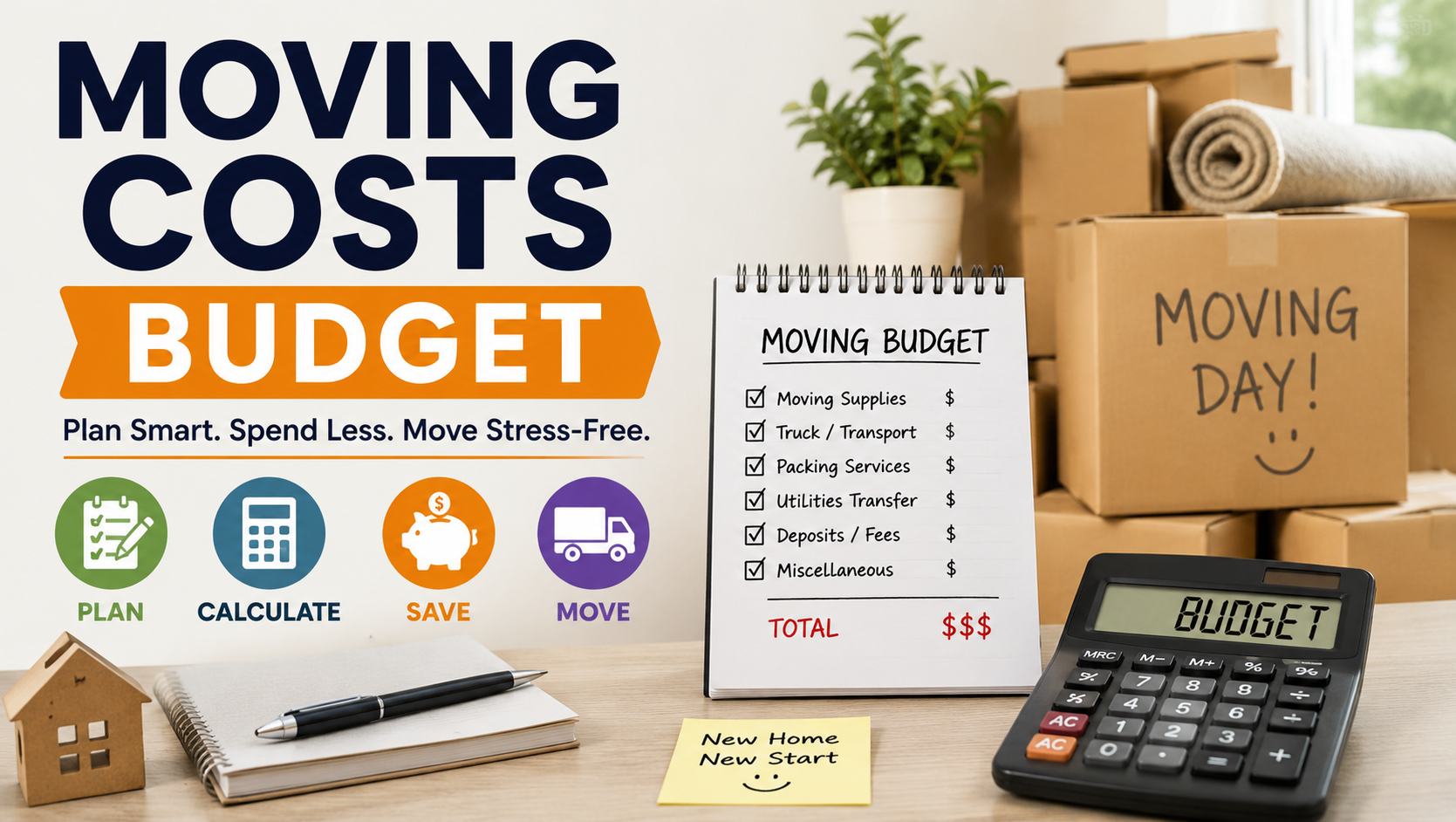
Here’s something nobody tells you before your first big move: the rent isn’t actually the hard part. You already know the rent. It’s printed right there on the lease, same number every month, no surprises. What gets people isn’t the number they knew about. It’s everything else that shows up in the two weeks around moving day, all at once, like it planned an ambush(Moving Costs Budget).
I’ve watched friends do this exact thing more than once(Moving Costs Budget). They save up carefully for the deposit and first month’s rent, feel proud of themselves, and then get blindsided by a truck rental, a stack of boxes, a cleaning fee at the old apartment, and a pizza bill from the three people who agreed to help carry a couch down four flights of stairs. None of it is one huge expense. It’s a dozen medium ones landing in the same week(Moving Costs Budget).
So if you’re planning a move and trying to figure out what it’s actually going to cost you, on top of the rent itself, this is for you. Let’s go through it properly(Moving Costs Budget).
Visit now:https://rentcalcpro.com/
Why Moving Costs Sneak Up on People(Moving Costs Budget)
Rent is predictable because it’s one number, due on one date, every single month. Moving costs are the opposite of that. They’re scattered, they hit at random times, and half of them don’t even feel like “moving costs” until you’re standing in a store buying curtains for windows that used to have blinds included(Moving Costs Budget).
A landlord might want the deposit before they’ll even hand over keys. The truck rental company wants payment the day you use it, not before, not after. The electric company wants a connection fee before they’ll flip the switch on. Meanwhile you’re still supposed to buy groceries and show up to work like it’s a normal week(Moving Costs Budget).
It’s not that people are careless with money(Moving Costs Budget). It’s that nobody sits them down and says “here’s the actual full list, not just the rent.” So let’s fix that.
Every Type of Cost You’re Likely to Run Into
I’ll be honest, not everyone will hit every single item on this list(Moving Costs Budget). A move across town with your own car looks very different from relocating to a new city for a job. But go through this and cross off what doesn’t apply to you, because what’s left is your real budget.
Upfront costs tied to the lease itself
This is usually the biggest single hit, and it lands before you’ve packed a single box.
- Security deposit, often a full month’s rent, sometimes more if your credit isn’t great or the landlord just runs it that way
- First month’s rent, paid in advance almost everywhere
- Last month’s rent, which some landlords ask for upfront too, especially in tighter rental markets
- Application or screening fees, small on their own but they add up fast if you applied to more than one place before getting approved
- Broker fees, common in bigger cities and sometimes as much as an entire month’s rent by itself
If you’ve ever moved somewhere like New York or Boston, you already know upfront rental costs alone can quietly reach three or four times your monthly rent. That’s usually the number that catches people completely off guard(Moving Costs Budget).
The physical act of moving your stuff(Moving Costs Budget)
This is what people picture first when they hear “moving costs,” but it’s rarely as simple as just booking a truck.
- Truck or van rental, priced differently depending on size, distance, and how many days you need it
- Professional movers, charged hourly for local jobs or flat rate for anything long distance
- Packing supplies, boxes, tape, bubble wrap, blankets for furniture, labels if you’re organized enough to use them
- Taking furniture apart and putting it back together, either yourself with tools you may not own yet, or as an add-on fee from the moving company
- Gas, if you’re the one driving
- Tolls and parking, which people forget until they’re circling the block looking for somewhere to leave a 16-foot truck
The gap between one place and the next
Moves rarely line up perfectly(Moving Costs Budget). You don’t always leave one apartment on a Friday and walk straight into the new one that same afternoon.
- A short-term storage unit, if there’s a gap between move-out and move-in
- A few nights somewhere temporary, if the timing doesn’t work out
- Pet boarding, if your new place isn’t ready yet and bringing the dog along isn’t an option
Getting utilities turned on
- Connection fees for electricity, gas, water, sometimes trash pickup
- Internet and cable setup, plus equipment costs depending on the provider
- Small admin costs around forwarding mail or updating your address on official documents
Cleaning, on both ends
- Move-out cleaning, which some leases actually require, and if you skip it the landlord just deducts it from your deposit anyway
- Small repairs, patching a nail hole, fixing a blind you broke two years ago and forgot about
- Move-in cleaning, because even a place that “looks clean” often needs a proper scrub before you start unpacking
The stuff that isn’t really about logistics
- Food, because your kitchen is in boxes and takeout becomes the only option for a few days
- Feeding and maybe tipping whoever helped you carry things
- Lost income if you had to take unpaid time off to actually get it all done
New home essentials nobody warns you about
This is the one people underestimate the most, mainly because it doesn’t feel like a “moving” expense in the moment.
- Furniture, if your old couch doesn’t fit the new layout or you suddenly have more rooms than stuff to put in them
- Curtains and blinds, since window coverings almost never come with you
- Basic appliances, depending on whether the new place comes with a fridge, washer, or microwave already
- A restock of cleaning supplies and toiletries, because somehow everything runs out at exactly the wrong time
Actually Building the Budget
Now that the full list is in front of you, here’s how to turn it into a real number.
Start by crossing out what doesn’t apply. Not everyone needs storage. Not everyone hires movers. Trim the list down to your situation first, before you start attaching dollar amounts to anything(Moving Costs Budget).
Get real quotes instead of guessing. Call two or three moving companies(Moving Costs Budget). Check truck rental prices for your actual dates, because weekends and the end of the month tend to cost more than a random Tuesday. Ask your landlord directly what the deposit will be and whether utilities are included. Call the utility companies before moving day, not after, so there are no surprises(Moving Costs Budget).
Add a buffer, no matter how careful you were. Something like 15 to 20 percent on top of your total(Moving Costs Budget). Not because you did the math wrong, but because there’s always something. A flat tire on the truck, an extra box of tape, a storage unit you didn’t think you’d need. That buffer is what keeps a small surprise from turning into a real problem(Moving Costs Budget).
Keep this money separate from your rent money. This sounds obvious written down, but it’s the step people actually skip. Moving costs and monthly rent are two different budgets that just happen to overlap in timing(Moving Costs Budget). If they’re sitting in the same account with no separation, it’s incredibly easy to accidentally spend next month’s rent on this month’s moving expenses(Moving Costs Budget).
Set a savings timeline and work backward. Say you land on $2,500 in total moving costs and you’ve got three months before the move. That’s around $835 a month. Written out like that, it stops feeling like one overwhelming number and starts feeling like something you can actually plan around(Moving Costs Budget).
What This Looks Like in Practice
Every move is different, but here’s a rough example for a local move into a one-bedroom apartment, just to put real numbers next to all of this.
| Category | Estimated Cost |
| Security deposit | $1,200 |
| First month’s rent | $1,200 |
| Application/broker fees | $150 |
| Truck rental (1 day) | $120 |
| Packing supplies | $80 |
| Movers or helper costs | $200 |
| Utility setup fees | $150 |
| Cleaning, old and new place | $150 |
| Food during the move | $100 |
| New home essentials | $300 |
| Buffer (15%) | $520 |
| Estimated Total | $4,170 |
Look at how much of that total is just the deposit and first month’s rent combined. That’s over half of it, right there. And that’s exactly why people feel blindsided even when they thought they’d planned ahead(Moving Costs Budget). It was never one giant expense. It was a pile of smaller ones, all sitting right next to the rent they’d already budgeted for(Moving Costs Budget).
Ways to Actually Bring the Number Down
Knowing the number is one thing. Shrinking it is another, and there’s more room to do that than people usually realize.
Move mid-week if you can, and avoid the end of the month(Moving Costs Budget). That’s when most leases start and end, so it’s also when trucks and movers charge the most.
Don’t rent a bigger truck than you need just for “extra room.” That extra size costs more in fuel and rental fees than it’s usually worth.
Get boxes for free before you buy any. Grocery stores, liquor stores, and local online groups usually have plenty to give away.
Get rid of things before you pack, not after. Fewer belongings means a smaller truck, fewer boxes, and a lot less time spent carrying stuff up and down stairs.
Ask about move-in specials. Landlords sometimes waive application fees or knock a chunk off the first month, especially for a unit that’s been sitting empty a while.
It doesn’t hurt to ask about splitting the deposit either(Moving Costs Budget). Some landlords will work with you on that, particularly if your rental history is solid.
Ask utility providers if there’s a promotion running before you schedule installation. Connection fees get waived more often than people assume.
And honestly, a few friends with a rented truck and some pizza can replace a professional crew for most local moves, saving you a real chunk of money.
Mistakes That Trip People Up
The deposit and first month’s rent aren’t a separate event from your moving costs. They land in the same tight window, sometimes the same week, so budget for them together instead of pretending they’re unrelated(Moving Costs Budget).
Packing supplies always cost more than people expect. Boxes, tape, and padding for anything fragile add up faster than it seems like they should.
Don’t assume your move-out date and move-in date will line up neatly. When they don’t, storage and short-term housing costs appear out of nowhere.
Utilities don’t just carry over. You’re usually closing one account and opening a brand new one, and that new one often comes with its own setup fee(Moving Costs Budget).
And don’t skip the buffer. Even a really thorough budget misses something eventually. The buffer is what turns that miss into a minor inconvenience instead of a genuine problem(Moving Costs Budget).
Read more:Rent Calculator Mistakes That Cost Tenants Money(Rent Calculator Mistakes)
Conclusion
Budgeting for a move was never really about predicting every single dollar down to the cent. It’s about knowing where the money actually goes, so none of it catches you off guard when it happens(Moving Costs Budget). Break it into categories, call around for real numbers instead of guessing, and leave yourself a buffer for whatever you didn’t see coming(Moving Costs Budget).
The rent was never the part you needed help with. It’s everything standing between your old front door and the new one that actually needed a plan, and now you’ve got one(Moving Costs Budget).
FAQ;s
1. What moving costs do people usually forget to budget for?
Application fees, security deposits, pet deposits, utility connection fees, and cleaning fees for your old place are the ones most often overlooked.
2. How much should I save before signing a new lease?
A common rule of thumb is to have first month’s rent, last month’s rent (if required), and a security deposit equal to one month’s rent , so roughly 2–3 times your monthly rent saved up.
3. Do I need to pay a security deposit even if I had one at my old place?
Yes. Security deposits don’t transfer between landlords, so you’ll need a new one, even while waiting for your old deposit to be refunded.
4. How long does it typically take to get a security deposit back?
This varies by location, but many places require landlords to return deposits within 14–30 days of move-out, provided there’s no damage beyond normal wear and tear.
5. Should I hire professional movers or do it myself?
It depends on budget vs. time. DIY moves (truck rental + your own labor) are cheaper but more physically demanding; professional movers cost more but save time and reduce injury risk.
6. How much do moving trucks or movers typically cost?
Local moves with a rental truck can range from $50–$150/day, while full-service movers for a local move often run $300–$1,500+ depending on the size of your home and distance.
7. What packing supplies should I budget for?
Boxes, tape, bubble wrap, packing paper, and markers can add up , budget somewhere between $50–$200 depending on the size of your move.
8. Are there hidden fees when setting up utilities in a new place?
Yes , many providers charge activation or connection fees for electricity, gas, water, internet, and cable, which can add $50–$200 total.
9. Should I budget for new furniture or household items?
If your new place has different dimensions or lacks certain fixtures (like curtain rods or shelving), factor in some money for furnishing gaps.
10. How much should I set aside for cleaning costs?
Move-out cleaning (to get your deposit back) and move-in cleaning for your new space can cost $100–$300 combined if you hire cleaners, or just cleaning supplies if doing it yourself.
11. What about pet-related moving costs?
Many landlords require pet deposits or monthly pet rent, which can range from $200–$500 upfront plus $25–$50/month extra.
12. Should I create a separate “moving fund” or use savings?
A dedicated moving fund is ideal so you don’t dip into emergency savings , start saving at least 1–2 months before your planned move.
13. How can I estimate total moving costs accurately?
List every category (deposits, movers, supplies, utilities, cleaning, food during moving days) and get real quotes where possible instead of rough guesses.
14. What’s a good way to cut down moving expenses?
Move during off-peak seasons (avoid summer weekends), source free boxes, ask friends for help, and compare multiple mover quotes.
15. Is it worth getting moving insurance?
If you have valuable or fragile items, basic moving insurance (often $100–$300) can protect against costly damage or loss during transit.