
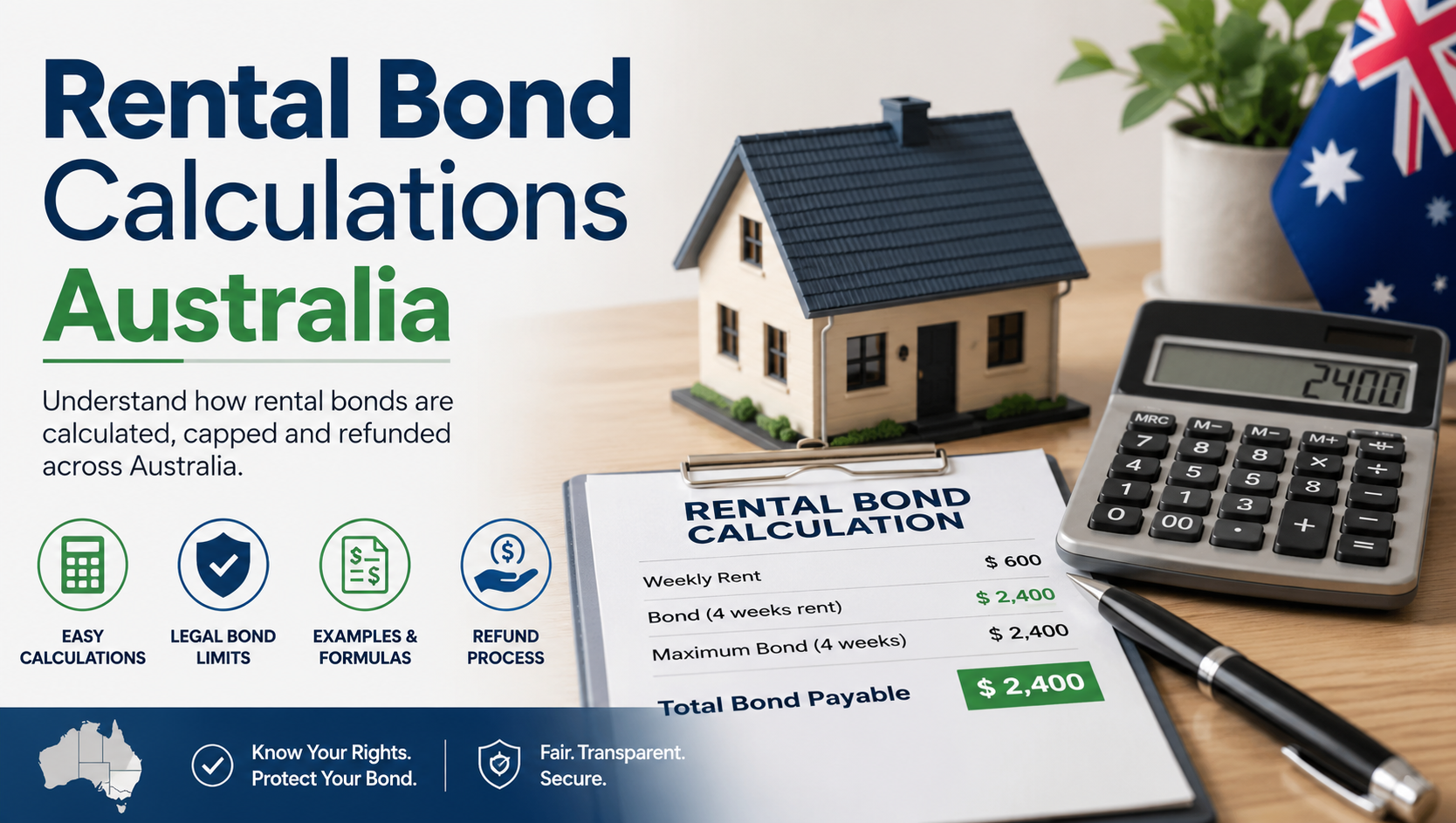
If you’ve ever signed a lease in Australia, you already know the feeling. Right before you get the keys, there’s one more number to deal with: the bond. It’s usually the biggest upfront cost of moving into a new rental, and yet most people pay it without really understanding how it’s calculated, where it goes, or what happens to it later.(Rental Bond Calculations Australia)
That’s the gap this article is here to close. Rental bonds aren’t complicated once you understand the basic logic behind them, but the rules do shift slightly depending on which state or territory you’re renting in, and that’s exactly where most of the confusion comes from.
Visit now:https://rentcalculatorpro.com/
What a Rental Bond Actually Is(Rental Bond Calculations Australia)
A rental bond, sometimes called a security deposit, is a sum of money a tenant pays at the very start of a tenancy. It’s not rent, and it’s not a fee that disappears into the landlord’s pocket. Instead(Rental Bond Calculations Australia), it sits aside as a kind of financial safety net for the landlord, in case something goes wrong during the tenancy, like unpaid rent, property damage beyond normal wear and tear, or unpaid bills the tenant was responsible for.
In almost every state and territory, this bond doesn’t stay with the landlord or the property manager.
The Basic Formula Behind Bond Calculations
At its core, a rental bond is calculated using one simple formula:
Bond Amount = Weekly Rent × Number of Weeks (as set by state law)
In most of the country, that number of weeks is four. So if your weekly rent is $500, the standard bond calculation looks like this:
$500 × 4 = $2,000
This is the formula most rent and bond calculators are built around, and it’s also the formula most real estate agents use when quoting a bond figure to a new tenant.
That said, “four weeks” isn’t a universal rule everywhere, and there are exceptions for higher-rent properties in some states.
Queensland
Queensland follows a similar four-week cap, and bonds are lodged with the Residential Tenancies Authority (RTA). One detail worth knowing here is that the maximum bond amounts set out under Queensland’s tenancy legislation apply to all bonds no matter what they’re called, including things like pet bonds, and charging more than the legal maximum is actually an offence(Rental Bond Calculations Australia). Queensland also allows bond top-ups during a tenancy. A bond can be increased if it’s been at least 11 months since the last increase, usually tied to a rent increase, and the new amount still can’t exceed the legal maximum.
South Australia
South Australia recently updated its bond thresholds. The threshold for requiring a higher bond was raised from $250 per week to $800 per week, meaning the vast majority of SA rental properties now only require the standard four-week bond, rather than the six weeks that used to apply to many properties(Rental Bond Calculations Australia). This change took effect from 1 April 2023, when, for rent that doesn’t exceed $800 per week, the maximum bond became the equivalent of four weeks’ rent.
Western Australia
WA also caps bonds at four weeks’ rent for most tenancies, unless the rent is over $1,200 per week. One thing that makes WA a little different is that a separate pet bond can also apply if you have animals, and this is capped at $260. It’s also worth knowing that bond replacement products, which are sometimes advertised as a cheaper alternative to paying a full bond upfront, are actually illegal in Western Australia(Rental Bond Calculations Australia).
Australian Capital Territory
In the ACT, a bond can be any amount up to a maximum of four weeks’ rent, and landlords must lodge it with the Rental Bonds Office and provide the tenant with a receipt.
Tasmania
Tasmania follows the same general principle(Rental Bond Calculations Australia). A bond cannot be more than four weeks’ rent, and it cannot be increased at any point during the tenancy, which is a little different from states like Queensland that allow bond top-ups.
Northern Territory
The Northern Territory stands out from the rest of the country in one important way. There is no official maximum bond amount in the NT, and bonds aren’t lodged with a central bond authority the way they are everywhere else(Rental Bond Calculations Australia).
Let’s Run Through an Example.
Say you’re moving into an home in NSW, and the weekly rent is $650. The math is straightforward:
$650 × 4 = $2,600
That $2,600 has to be lodged with NSW Fair Trading within 10 business days of you paying it. From there, it just sits, untouched, until your tenancy comes to an end.
Now picture the same scenario, but in the Northern Territory instead. There’s no official cap there, so the bond amount really just comes down to whatever you and your landlord agree on. Which means two people paying the exact same rent in different parts of the country could walk away with very different bond amounts.
Read more:Hidden Costs of Renting in Australia Beyond Weekly Rent
So What Actually Happens to Your Bond While You’re Living There?(Rental Bond Calculations Australia)
Once it’s lodged, your bond basically goes into a kind of holding pattern for the entire time you’re renting. Nobody touches it; not the landlord, not the agent. It just sits there with the relevant authority. This is actually a good thing for tenants, because it means there’s no risk of a landlord quietly dipping into that money for something unrelated to your tenancy(Rental Bond Calculations Australia).
When you eventually move out, the bond gets sorted out between you and the landlord. If everyone’s on the same page, no damage, no unpaid rent, nothing outstanding, the refund usually comes through pretty quickly. If there’s disagreement, that’s where the tribunal system steps in (NCAT in NSW, SACAT in South Australia, and so on), giving both sides a formal way to sort it out.
Mistakes Renters Make With Their Bond
A few things trip people up again and again:
Assuming the four-week rule is identical everywhere. It’s not, several states have their own quirks, and the NT doesn’t cap it at all.
Not double-checking where the bond actually goes. It should always end up with an official bond authority, never just sitting with the landlord or agent(Rental Bond Calculations Australia).
Skipping the receipt or confirmation number. Every state gives you some kind of proof that the bond was lodged properly. Hang onto it.
Forgetting about pet bonds. If you’ve got a pet, it’s worth checking whether your state charges a separate bond for that.
Not realising bonds can sometimes increase(Rental Bond Calculations Australia). If you’re in a longer lease and your rent goes up, find out if your bond needs to follow.
Why This Is Actually Worth Knowing
It’s easy to think of the bond as just another box to tick before you get the keys, but understanding how it’s calculated genuinely affects your budget. A lot of people plan carefully around their weekly or monthly rent and then get caught off guard by the bond, which can be a big chunk of money due all at once(Rental Bond Calculations Australia). If you’re paying $500 a week, moving in doesn’t just cost you $500; in most parts of the country, you’re also handing over a $2,000 bond on day one.
It also protects you. Knowing your state’s rules means you’ll immediately notice if someone’s asking you for more than they’re legally allowed to.
Conclusion
At the end of the day, rental bonds across Australia follow the same general idea: usually four weeks’ rent, held safely by a government authority until your tenancy wraps up. But the finer details shift depending on where you are. Some states adjust things based on rent thresholds, some allow extra pet bonds, and the Northern Territory skips the cap altogether(Rental Bond Calculations Australia).
Before you sign anything, it’s worth taking a couple of minutes to check exactly how things work in your state, what you should expect to pay, and where that money is going to sit. It’s a small bit of homework that can save you a lot of confusion later, or stop you from being asked to pay more than you actually should(Rental Bond Calculations Australia).
1. Is a rental bond legally compulsory in Australia?
Not always. A bond isn’t a legal requirement in every state, but the vast majority of landlords ask for one as standard practice before handing over the keys(Rental Bond Calculations Australia).
2. Can a landlord ask for a bond and rent in advance at the same time?
Yes, most states allow landlords to request both a bond and a small amount of rent paid in advance (commonly up to two weeks), though the exact rules vary by state.
3. What happens to my bond if I sell my pet or it passes away during the tenancy?(Rental Bond Calculations Australia)
In states with a separate pet bond, this amount is generally tied to having a pet on the property(Rental Bond Calculations Australia). If the pet is no longer there, it’s worth discussing with your landlord whether the pet bond portion should be reviewed.
4. Can I use my bond as my final rent payment instead of paying rent?
No. Bonds are held in trust specifically for end-of-tenancy claims like damage or unpaid bills. You can’t redirect it to cover your last rent payment without the landlord’s agreement and the bond authority’s involvement.
5. How long does it typically take to get a bond refund after moving out?
If both tenant and landlord agree there are no issues(Rental Bond Calculations Australia), refunds are usually processed within a few business days. Disputes can extend this significantly while a tribunal reviews the case.
6. Can a landlord refuse to lodge my bond with the official authority?(Rental Bond Calculations Australia)
No. Lodging the bond with the relevant state or territory authority is a legal obligation in most of Australia (with the Northern Territory being the main exception), and failing to do so can result in penalties for the landlord.
7. Do share house tenants each pay a separate bond?(Rental Bond Calculations Australia)
Generally, no. Most tenancies only require one bond per lease agreement, which may be split between co-tenants depending on what’s agreed in writing.
8. What counts as “damage” that can be deducted from my bond?
Damage usually refers to harm beyond normal wear and tear, like broken fixtures, stains, or structural issues, not everyday signs of living in the property(Rental Bond Calculations Australia).
9. Can my bond be used to cover cleaning costs at the end of the lease?
Only if the property isn’t left in a reasonably clean condition compared to how it was at move-in. Routine cleaning expected of any tenant typically can’t be claimed unless the property was left excessively dirty.
10. Is there a time limit for a landlord to make a claim against my bond?
Yes, in most states, landlords need to lodge any claim against the bond within a specific timeframe after the tenancy ends, otherwise the full amount may be released back to the tenant.
11. Can my bond increase automatically if my landlord raises the rent?
Not automatically. In states that allow bond top-ups, the landlord must follow a formal process and give written notice before the bond amount can be increased.
12. What happens to my bond if my landlord sells the property?
Your bond stays protected with the bond authority regardless of ownership changes. The new owner inherits the existing tenancy agreement and bond arrangement.
13. Can I negotiate a lower bond with my landlord?
In theory, yes, since the legal cap is a maximum, not a fixed amount. In practice, most landlords request the maximum allowed amount as standard.
14. Do bond rules differ for furnished versus unfurnished properties?
The core bond calculation is generally the same, although some landlords factor in higher potential damage risk for furnished properties when negotiating bond terms within the legal limit.
15. What should I do if I believe my landlord is charging more than the legal bond maximum?
You can contact your state or territory’s tenancy authority directly. Overcharging a bond is considered an offence in most parts of Australia.
16. Is my bond protected if my bond authority or government department changes systems?
Yes. Bonds are held in trust under government regulation, so administrative or system changes don’t affect the safety or ownership of your money(Rental Bond Calculations Australia).
17. Can a real estate agent hold my bond instead of lodging it with the authority?
No. Agents are required to lodge bonds with the relevant state authority within a set timeframe. They aren’t permitted to hold bond money themselves long-term.
18. Does paying a higher bond mean I have stronger tenant protections?
No, the bond amount doesn’t change your legal rights as a tenant. Your protections come from tenancy legislation itself, not from how much bond you’ve paid.