
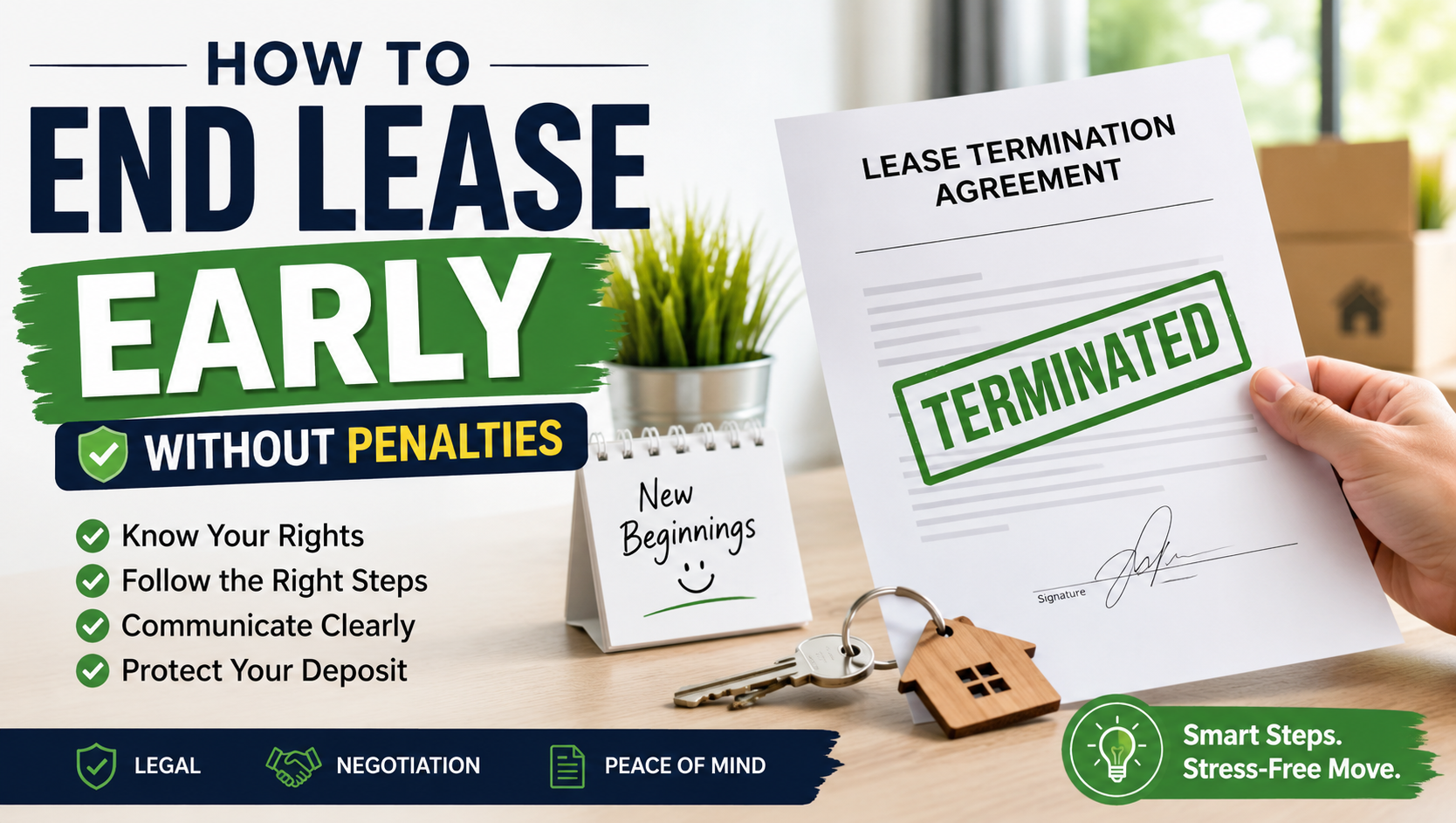
Breaking a lease feels like one of those things you’re just not supposed to do. Most people picture losing their entire deposit, getting a nasty letter from a lawyer, or watching their credit score take a hit. Here’s the thing, though(End Lease Early) , it’s rarely that dramatic. Landlords and tenants both have rights in this situation, and there are legitimate, well-worn paths out of a lease that don’t involve losing your shirt. Some of them don’t cost you anything at all.
Maybe you got a job offer across the state. Maybe the apartment turned out to have a mold problem nobody mentioned. Maybe your circumstances just changed. Whatever brought you here, this guide is about the actual options in front of you , not scare tactics(End Lease Early).
Visit now:https://rentcalculatorpro.com/
Why People Break Leases Early (More Often Than You’d Think)
Life rarely sticks to a tidy 12-month plan. Some of the most common reasons tenants need out early:
- A job relocation or transfer
- Buying a house
- Money got tight
- A health issue or family emergency
- The unit itself became unsafe or unlivable
- Domestic violence or a threatening situation
- Military orders
- A relationship or roommate situation falling apart
None of this is rare. Landlords have seen it all before, which is exactly why most leases , and most state laws , already have some kind of built-in exit ramp. You just have to know it’s there.
Start by Actually Reading Your Lease(End Lease Early)
I know, nobody wants to reread a 12-page lease. But before you do anything else, sit down with it and look specifically for:
- An early termination clause , this spells out the process and cost, if any, for leaving early
- Subletting or lease transfer language , some leases let you hand things off to someone else
- Notice requirements , how many days you’re required to give
- A military clause, which in the U.S. is required by federal law under the Servicemembers Civil Relief Act
A lot of leases already include a “buyout” option , pay a set fee, often equal to one or two months’ rent, and you’re free and clear. If your lease has this, it’s usually the fastest and cleanest way out.
Just Talk to Your Landlord(End Lease Early)
This step gets skipped constantly, and it shouldn’t. A lot of landlords would honestly rather work something out with you than deal with an empty unit and the whole song and dance of re-listing it(End Lease Early). Have the conversation calmly, and put it in writing , email works fine, and it gives you a paper trail if you ever need one.
Be upfront about your situation. Landlords tend to be more flexible when:
- You give them real notice, not two weeks
- You offer to help find a replacement tenant
- You chip in for the cost of advertising the place
- You’ve paid on time and haven’t caused problems
A lot of the time, this ends with what’s called a mutual lease termination agreement , basically both sides agreeing, in writing, to end things early with no strings attached. Get it signed. Don’t just take someone’s word for it(End Lease Early).
When the Law Is Actually on Your Side
Some situations override whatever the landlord wants, full stop(End Lease Early). These vary by state, but a few protections show up again and again.
Uninhabitable conditions
No heat in winter. Mold that won’t go away. Broken locks, a pest problem, plumbing that just doesn’t work. If you’ve reported these issues and your landlord hasn’t fixed them, most states let you walk away without penalty(End Lease Early) , this is often called “constructive eviction.” Keep photos, dates, and copies of every repair request. You’ll want that paper trail if things go sideways(End Lease Early).
Domestic violence or harassment
Many states allow survivors of domestic violence, stalking, or sexual assault to break a lease early , usually with a police report or protective order as documentation , without any financial penalty(End Lease Early).
Military orders
Under the SCRA, active-duty service members who get deployment or permanent change of station orders can legally end a residential lease, typically with 30 days’ written notice(End Lease Early).
The landlord broke the rules first
If your landlord’s been entering your place without notice(End Lease Early), ignoring repairs they’re legally required to make, or violating other terms of the lease, that can be grounds to terminate early too.
The lease itself is illegal
If part of your original lease violates local or state tenant law, that clause might just be unenforceable , which can work entirely in your favor.
Consider Subletting or Assigning the Lease(End Lease Early)
If none of the above apply, subletting might still get you out. This means someone else takes over the rent (and possibly the lease) while you move on.
- Subletting , you’re still legally on the hook, but someone else lives there and pays you.
- Lease assignment , the new tenant takes the lease entirely, and you’re off it.
Either way, get your landlord’s written approval first. Subletting without permission can breach your lease and create a bigger mess than the one you started with.
Put Your Notice in Writing(End Lease Early)
Whatever path you take, always document your intent to leave. Include:
- The date you’re moving out
- The reason, if it’s legally relevant
- A request for written confirmation back from the landlord
- Your forwarding address, so your deposit actually reaches you
Send it by email, and by certified mail too if you want extra protection. If there’s ever a disagreement down the line, you’ll be glad you have it.
Not Every “Penalty” Is Actually Enforceable
Here’s something a lot of tenants don’t know: landlords generally can’t charge you more than what they actually lose because you left early. This is called the “duty to mitigate damages,” and in most states, landlords are legally required to make a real effort to re-rent the place instead of just collecting your remaining rent and calling it a day.
So if your landlord finds a new tenant within a month, they usually can’t keep billing you for the rest of the lease term , even if the lease itself says otherwise.
Negotiate the Buyout
If there’s no legal exception working in your favor and your landlord won’t budge on the fee, you still have room to negotiate:
- Ask for a lower termination fee
- Offer to show the unit to prospective tenants yourself
- Propose paying only for the time it sits vacant, not the whole remaining term
- Offer to leave the place spotless in exchange for waiving the fee
Most landlords would rather have a smooth exit than a legal headache. There’s usually more wiggle room than people assume.
Document Everything, Always
Through all of this, your paper trail is your best protection:
- Save every email and text with your landlord
- Photograph the unit’s condition when you leave
- Keep copies of any termination agreements
- Hold onto proof of exactly when you gave notice
If a dispute ever ends up in small claims court, or your deposit becomes a fight, this is what will actually matter.
Read more:Monthly Rent Calculator Guide for Shared Apartments(Monthly Rent Calculator Shared Apartments)
Conclusion
Ending a lease early doesn’t automatically mean losing your deposit or getting sued. Between the clauses already built into your lease, state-level tenant protections, an honest conversation with your landlord, and legal exceptions like unsafe living conditions or military orders, most tenants have more room to move than they think.
Act early, communicate clearly, and keep records of everything. Half the time, all it really takes is one respectful conversation and a signed agreement , and you’re out clean.
FAQ:s
1. Can I break my lease without paying any penalty at all?
Yes, in certain cases , like unsafe living conditions, military orders, or domestic violence situations , most states let you walk away without any financial penalty(End Lease Early).
2. What happens if I just leave without telling my landlord?
You risk losing your security deposit, getting sent to collections, or even facing a lawsuit for the remaining rent owed. It’s always better to communicate first(End Lease Early).
3. Does breaking a lease hurt my credit score?
It can, but only if the landlord takes legal action or sends unpaid rent to collections. A mutual termination agreement usually avoids this entirely.
4. What is a lease buyout clause?
It’s a clause already written into many leases that lets you pay a set fee , often one or two months’ rent , to end the lease early with no further obligation.
5. Can my landlord refuse to let me break the lease?
They can refuse a request, but they still have to follow state law, including the duty to re-rent the unit instead of charging you for the entire remaining term.
6. What counts as an “uninhabitable” living condition?
Things like no heat, serious mold, broken locks(End Lease Early), pest infestations, or major plumbing failures that your landlord hasn’t fixed after being notified.
7. Do I need a lawyer to break my lease early?
Not usually. Most situations can be resolved directly with the landlord or through a written mutual termination agreement(End Lease Early). A lawyer only becomes necessary if things turn into a legal dispute.
8. What’s the difference between subletting and lease assignment?
Subletting means you’re still legally responsible for the lease while someone else lives there and pays you(End Lease Early). Lease assignment transfers full responsibility to the new tenant.
9. Can I sublet without asking my landlord?
No , doing this without written permission usually violates your lease and can create bigger problems than the one you’re trying to solve.
10. How much notice do I need to give before moving out early?
This depends on your lease and state law, but 30 days’ written notice is common. Always check your specific lease for the required notice period.
11. What is the “duty to mitigate damages”?
It’s a legal requirement in most states that landlords must make a reasonable effort to re-rent your unit instead of collecting rent from you for the rest of the lease term.
12. Can active-duty military members break a lease without penalty?
Yes , under the SCRA, service members with deployment or permanent change of station orders can legally terminate a lease with proper written notice.
13. What should I include in my written notice to vacate?
Your move-out date, the reason if legally relevant, a request for written confirmation, and your forwarding address for the deposit.
14. Will I get my security deposit back if I break my lease early?
Possibly , especially if you’ve left the unit in good condition and followed proper notice procedures. Document everything to protect yourself.
15. What if my landlord violated the lease first?
If they’ve entered your unit without notice or ignored required repairs, this can also be valid grounds for you to terminate the lease early without penalty.